Caught in a ‘Catch 23’ – The end of local TV news in Akron

(This chapter is excerpted from “Akron’s Daily Miracle,” edited by Stuart Warner and Deb Van Tassel Warner, copyright 2020, University of Akron Press)

Screen grab from WAKC-TV23

By Mark Williamson

Its end was ignominious.  Just a passing comment to a young reporter and that was that.  Local television news in Akron was dead.

Lowell “Bud” Paxson, the Florida-based founder of the Home Shopping Network, took legal ownership of WAKC Television, Channel 23, at midnight February 26, 1996.

By 10 the next morning, as news crews headed out to cover their stories for the early newscast at 6 p.m., Paxson had ordered his management team occupying TV 23’s studios at 853 Copley Road to terminate nearly the entire staff of more than 80 employees. 

Accompanied by armed guards, their approach was certainly newsworthy.  They fired nearly a hundred people by word of mouth.  Ironic, perhaps, that a communications company would merely tell a young reporter named Steve Litz, passing in a hallway on his way to an editing suite, “We’re firing you and your co-workers.  Go around the place and pass the word to your friends that we won’t be needing you people anymore.”

It is important to note here that Paxson made a personal appeal six months before the takeover.  The staff had been notified to attend a meeting in the studio to meet and greet him. Paxson, the staff was told, was coming to talk to everyone about his plans for WAKC once he assumed ownership.  He promised to take the news product to a “whole new level.”  It would be “competitive” with Cleveland.  He was going to “sink more money” into the set design, the news product, the people doing the news. And there would be raises, higher starting pay and “more promotion of the product” out in the community. 

Reporters are suspicious by nature but most stayed on to see it through.  That would turn out to be regrettable for most.

Paxson made verbal commitments to plans he never intended to keep.  His intent, as it turns out, was to keep everyone he could on the payroll to maintain the value of the operation until he could officially own it and then turn it into another portal for syndicated TV shows and home shopping.  Nothing local, save for the occasional and obligatory public affairs program, would ever appear again on the “Akron” station.  It no longer looked like Akron on TV 23.  That broadcast could have been coming from anywhere:  Amarillo; Gallup, New Mexico; Flagstaff, Arizona; Winona; Kingman, Barstow or San Bernardino  (with apologies to Bobby Troup).  The AK, the Akron in WAKC, was gone forever.  So was Bud Paxson 19 years later, when he died in Montana.  But he certainly left a mark on Akron.

After Paxson chose the nuclear option, Akron tried to fight back.  Mayor Don Plusquellic went to West Palm Beach, Florida, in 1997 to express to Paxson, in person, how he felt about what he had done to his city.  Mayor Plusquellic wanted to work with Paxson to see about funding for just a pared-down newscast once per day on the station.  Paxson refused.

You have to give Mayor Plusquellic credit.  Plenty of government leaders would be happy to have one less gaggle of reporters following them around with cameras and audio recorders.  But the mayor  had a good story to tell about Akron and understood the value of what a local television news operation could bring to promoting that story to his community every day. 

“It’s a two-edged sword,” he  would say.  “A love-hate relationship we have with the media.  We need them.  They need us.  But sometimes, there’s a helluva price for people in my business to pay for those relationships. They never pay.” 

Another amusing aside about the mayor’s view of the media was that he felt the good people in government who were doing their jobs and doing them well received no coverage to speak of.  “They only cover two kinds of people in my business.  Crooks and clowns.  That’s it.” 

As the mayor’s communications director and media relations person for many years after leaving WAKC, I’d have to say that when it came to television news, that was pretty much right on the money. 

But back  to Copley Road and TV 23.

A mere 18 hours after taking ownership of WAKC, Bud Paxson removed a news broadcast that had been a part of the TV landscape and people’s daily habits since the early 1970s, and replaced it with an episode of The Love Boat.  The switchboard lit up at the old theater building that had housed WAKR Radio and Television since the 1940s, and for the very first time in more than 50 years, calls were answered at the station by automated voice mail.  Not by Hazel Botzum or Isabelle Summerville.  Both women had been part of the station and their community for many years.  They typified the style of ownership of founder Bernard Berk, son Roger Berk, Sr., and grandsons Roger Berk, Jr., and Robert Berk. They hired local people, for the most part. Nice people.  Friendly people who cared about Akron.  The Berks are from Akron and it mattered to them that they served the community in which they lived.

But now, that personal touch was gone.  The news went dark.  The commitment to community was jerked out from under the city that had watched a mix of young college students and wily veterans work their tails off to capture the day’s events on camera and present them on the air.

The relatively small station had its struggles competing with four bigger-market TV news operations in Cleveland, 30 miles to the north.  Our challenge each day to compete for viewers was akin to putting a mom-and-pop grocery store next to a massive chain store and telling it to go out there and make some money. 

The people on the air at WAKC had endeared themselves in many ways to Akronites and viewers around Northeast and North Central Ohio.  (Its over-the-air signal was strong to the south, even beyond Canton, which is 20 miles south of Akron).  It was the little engine that could of TV news.  Viewers got to know the staff, reporters, anchor people and the videographers (mobile cameramen and camerawomen).  Mark Johnson, from Ashtabula, and Mark Nolan, from Stark County, both did the weather at TV 23 and moved on to do the same in Cleveland television.  Phil Ferguson, our Copley-Fairlawn born-and-bred sports anchor, has been a fixture in local radio ever since TV 23.  Tim Daugherty, who grew up in the Cleveland area, also did the weather at WAKC while working on the air at 97.5 WONE.  He remains at WONE today.  Others our viewers may remember from the last couple of years on the air: Lauren Glassberg is with WABC in New York City as a reporter; Steve Litz is a reporter at NBC 6 in Miami; and Dawn Gigi (Gigi Hinton) is a producer at TV ONE in Washington, D.C.  Carole Sullivan, who was Carole Chandler on the air, went to work at Channel 3 (WKYC) in Cleveland after leaving TV 23 and is now  hosting Today in Nashville on WSMV. Co-anchor Jim Kambrich is anchoring the news in Albany, N.Y. And, of course, Carol Costello was at CNN, then Headline News until the fall of 2018.

A host of talented off-camera people who got their start in Akron are still working in Cleveland television as editors, producers and videographers.  They were mere rookies when we hired them at TV 23.  Now many of them are closing in on retirement.

The Cleveland on-air presentation was more polished, had more money to invest in every aspect of the broadcast. But the no-nonsense approach at  WAKC (and, before it, WAKR-TV) had a loyal following from viewers who regularly lauded the station for just delivering the news.  No comedy.  No contrived cross chatter on the news set.  Nothing fancy.  Just the facts, as Jack Webb would say. 

The job was to cover what happened each day while the viewers were otherwise occupied.  So the team would hit the streets and bring back a product every day that folks came to rely upon.  To have the proverbial rug pulled from underneath them was truly a shock to many.  Even those folks who might have poked fun at the station’s sometimes less-than-polished look (compared to bigger city news) realized what they were losing.

The irony of what was about to occur wasn’t lost on me.  After spending nearly 20 years at TV 23 as a reporter, news anchor and news director, I was intimately aware of the difficulties of covering news in our town —  a town that was losing jobs, population, businesses, nightlife and its downtown.   In fact, our downtown had been made famous in a song by native daughter Chrissie Hynde and it wasn’t for anything positive.

Akron’s population was falling from its peak of around 290,351 in 1960 to 217,613 in 1996 when Bud Paxson  pulled the plug on local news.  A city that once boasted five Fortune 500 corporate headquarters, was the tire and rubber capital of the world and was once the trucking capital, too, now was struggling with unemployment, the pivotal companies that made it great looking to move out of town.  Many did.  Akron no longer employed 40,000 in the rubber industry.  There may have been 5,000 or fewer by the early 1980s. 

One of the many phrases coined about the TV news business is that it doesn’t cover planes that land.  Or, if there’s a second coming of Christ and we don’t have video, we’re not leading with it.  There’s no shortage of crassness, that’s for certain.  But there is a point to be made in that TV news relies on conflict, negative emotion and the kinds of seedy things people just might not see every day.  Murder.  Mayhem.  Fire. Chemical leaks. 

And scandals.

A spate of high-profile scandals that thrust Akron into the national news more than once served to energize viewership in local news in the late 1970s and early ’80s. Perhaps the most notorious was a public corruption scandal within Summit County government that took down a few public officials and gave news reporters more than a year’s worth of follow-up stories that led directly to the indictment and conviction of a local probate judge.  The story received coverage by a new reporter on the national scene named Geraldo Rivera, who was on a relatively new format of news program on a show called 20/20 on ABC with Hugh Downs and Barbara Walters.  Its ratings were strong.  That didn’t bode well for Akron’s reputation in the Rivera-created, theatrically produced series titled Injustice for All.

I have argued in the last 20 years that even murders, for the most part, capture much less attention than before because they have become more commonplace.  We needed stories about the city itself and where it was going.  What was it doing to attract business, jobs, people?  There wasn’t much to say at that time. But a city’s image, the face it shows to the region and the rest of the world, as it were, comes often from the high gloss of chamber of commerce-type commercials, fun promotional spots for the local stations, and the kinds of news stories that promote a lifestyle that might retain and attract young people and families.

In Akron, a town that endured decades without much of a good story about its image, a town that had more news about layoffs and business closures (especially in the vital rubber industry) than anything else, except crime, something was about to change.

But there would now be no television station left to cover it, to tell the stories, and most importantly, to show nightly images of the now evolving city.

The irony – especially for the mayor and the investors sticking their necks out to make Akron catch up after about 50 years of neglect – was that this all began to change almost immediately after the demise of local television news.  Not long after Capt. Merrill Stubing began to pilot the 6 o’clock hour on TV 23, downtown Akron began to demonstrate it had a pulse.  It was coming alive.  With $100 million in investments, Mayor Plusquellic was able to deliver three high-profile projects that would draw people back downtown: the John S. Knight Center, Inventure Place (National Inventors Hall of Fame) and Canal Park, home to the AA baseball affiliate for the Cleveland Indians.

“A city’s downtown is like the front room of a home.  It’s the first and last thing people see when they visit, and it better leave a good impression,”  Deputy Mayor for Economic Development James Phelps once said.

Within 10 years, by the early 2000s, downtown Akron was out-producing all other areas of the city combined when it came to the taxes it generated.  The investment was working and sending tax dollars to the city treasury in amounts stout enough to keep 50-100 of Akron’s police force on the payroll.  Close to 25,000 people were working downtown, another huge leap even from the early 1990s.

But without local television to assist in telling this story – with images of crowds of people and traffic coming back to downtown for baseball and nightlife – how would Akron get its story out to even its own citizens?

Not through Cleveland media.  Cleveland television news has never done a thorough job covering Akron.  How can it?  But as long as there is no one else doing it in our city, Cleveland can get away with reporting on news here as if we were a mere suburb.  That’s why for years, much of the time, newsrooms in Cleveland have merely opened the morning Akron Beacon Journal, scanned it, and pulled out the stories it wanted to cover that day.  Most of the work was already done by a print reporter, so there really wasn’t much to it, and let’s face it, 70 percent of their audiences lived in the Cleveland area and had no idea it was old news.  It was, as we at TV 23 used to say, news to THEM.

I’m going to share with you a secret Cleveland doesn’t want you to know.  When the A.C. Nielsen Company (now the Nielsen Corporation) does ratings surveys to determine how many folks are watching television news in Cleveland, it includes the population of Akron.  Akron was and is considered part of the Cleveland TV market.  That helps Cleveland because the larger the population, the more advertisers pay the stations to run commercials. 

In New York, Los Angeles and Chicago, they charge more than in Lincoln, Nebraska, or Daytona Beach.  Cleveland’s stature in the world of TV markets is inflated by Akron residents who make up 30 percent of Cleveland’s “TV population.”   Have you ever seen a successful business that could ignore a third of its customers?  If I owned a men’s clothing store and refused to sell the white dress shirts that one in three of my customers demanded, and those customers quit coming to my store, I’d be out of business.  Not in Cleveland television.  It makes money from Akron merely because we exist.  We are a number that serves them well whether we watch or don’t watch and whether they cover news here or not.

At WAKC, we called this phenomenon a Catch 23. Akron advertisers were not crazy about paying Cleveland ad rates to buy time on a local news program that didn’t have Cleveland’s larger population watching.  Nielsen did not want us selling advertising without using its numbers. But, if we used them, it appeared we had no audience because 70 percent of the people it was looking at as potential viewers lived in Greater Cleveland and couldn’t pick us up and, quite frankly, did not want to.  Why would they? 

We had some loyal advertisers who sustained us for years, but I’m fairly certain we continued to lose money year after year.  When we went on the market to purchase syndicated programs to air whenever there was no network programming, Akron television had to pay the much higher Cleveland rate for those shows.  But, again, we could not get the size of audience to justify or even pay for the shows we had to buy. Hence, Catch 23. 

Former WAKC weatherman Tim Daugherty knew the value of those images.  His nightly weather always featured video shot that day of something interesting going on around the region.  “We actually would receive comments from viewers asking about the weather video…where it was taken and even what we might have been looking at in the shots we used.  It was an effective way of showing off something new, a development, a natural resource such as the river or parks or an event that was drawing crowds,” Daugherty said.

Half an hour of local television time twice each day could be a powerful vehicle for getting the good that was going on into homes around the city.  The Akron Beacon Journal did a good job of those days of downtown growth, though Mayor Plusquellic would disagree, but a newspaper is a poor substitute for video when it comes to showing off a city’s best elements day or night.

Missing were the cameras at the opening of a brand-new park for professional baseball. Or at the opening ceremony for the National Inventors Hall of Fame. There was coverage of the christening of the John S. Knight Center downtown in 1994, but as the new convention center started to come into its own, attracting convention business and new visitors to the city, television news was gone.

We missed the opening of the remodeled and redesigned O’Neil’s Department Store building into a beautiful home for a local law firm overlooking center field at Canal Park.

We missed restaurant openings and the creation and completion of the Towpath Trail.  Children’s Hospital has expanded about 10 times since TV 23 went under, but not one image of this beautiful transformation has been broadcast on local television news. 

The East End development, the new Goodyear headquarters, the new Bridgestone headquarters, GOJO’s move into downtown and so many more big stories all came about after the signal from TV 23 was cut off for local news.

There’s a new hotel downtown near Luigi’s. Heck, Luigi’s is now just a small part of what has transformed the north end of downtown, including high-rise condos, cool new apartments, businesses, galleries, a fencing school and the rebirth of America’s first and oldest public housing complex, once known as Elizabeth Park.

Lock 3, an outdoor entertainment venue along the banks of the historic Ohio & Erie Canal, the waterway that made Akron grow in its infancy, is again a resource.  The entire downtown area has the canal in view

New office buildings went up downtown, old ones were saved and restored by Tony Troppe, a loquacious developer who was putting his money were his mouth was and bringing new life to historic buildings that Akron had long since written off as useless.

But you will hardly see any of that.

Much of what I’ve written is within an almost archaic model in the first quarter of the 21st century.  Fewer and fewer people are watching traditionally delivered television (over the air, or cable).  Of those who still do, the numbers watching television news are dropping.  Younger generations are finding it obsolete, not part of their culture, too linear to view in their on-demand world. 

Newspapers, sadly, are in decline as well.  So I’m not sure the idea of resurrecting TV news for this community (as many continue to suggest today) is at all worthwhile. In Akron, even during its very best days, it was a struggle to make it work commercially with dedicated owners (the Berk family) and enthusiastic employees because of the forces of the Cleveland market.

With today’s declining viewership nationwide, it’s unlikely we’ll ever see true, local television news in that form again.  It was local theater, live in your living room every night, done by young people you may have known.  It gave many a good start to a long career.  But the strangely configured market it was trapped in made it vulnerable to out-of-town owners who truly cared not about Akron or news.  They stalked it, killed it, made a bundle and took off. 

That, my friends, is a Catch 23.

Coming Together for A Question of Color

By Deb Van Tassel Warner

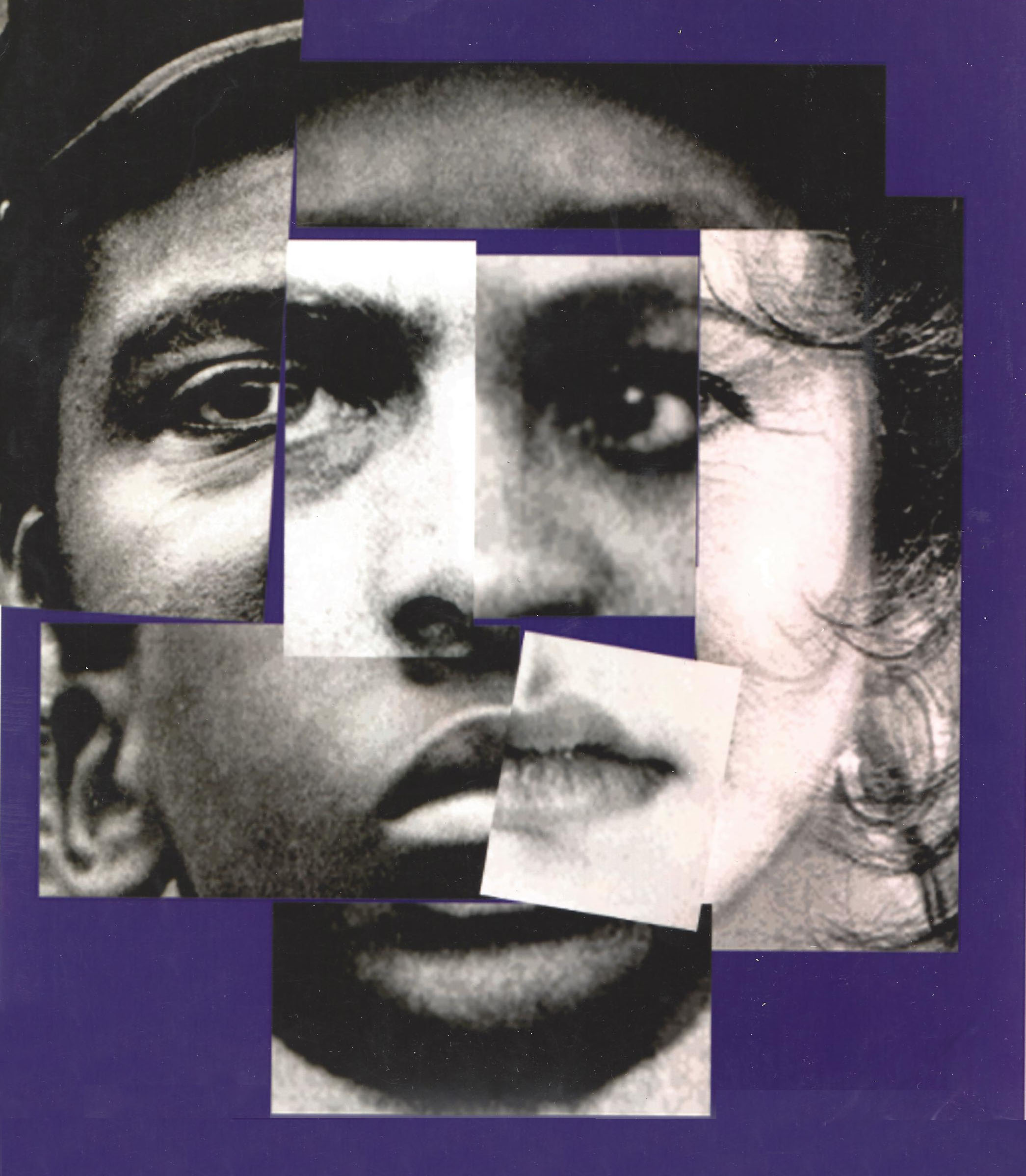
Question of Color cover illustration by Art Krummel
Question of Color illustration by Art Krummel/ Akron Beacon Journal

On the southeast side of the corridor leading to the editorial board offices at 44 E.  Exchange St. sat a windowless room decorated top to bottom, walls, floor and upholstery, in deep shades of red.

Akron Beacon Journal employees referred to the room, neither surprisingly nor creatively, as the Red Room. Reporters took advantage of its privacy to conduct interviews, hold confidential conversations and have spirited discussions over brown bag lunches about the craft of writing. Editors used it for planning and training sessions, to deliver performance reviews, and occasionally to melt down privately from stress.  No one remembers who deemed red suitable for the room’s purpose. But as our cafeteria had been decorated in blue tones (yes, we called it the Blue Room!) in the same renovation, some decision-maker must have thought red was just the ticket. 

On an auspicious day in mid-1992, seven staffers occupied the Red Room for an entire shift, not to be interrupted, to brainstorm ideas for a project on race relations, an initiative that two years later would win the newspaper the prestigious Pulitzer Prize Gold Medal.

The idea hatched after the April 29, 1992, trial verdict clearing four white Los Angeles police officers in the brutal, videotaped beating of Rodney King. Gathering community reaction, the Beacon had run a story of a white woman in Canton holding up a sign that simply said: “I’m sorry.”

For Black Americans, the verdict “underscored . . . the years of unfair treatment by police and the criminal justice system,” reporter Yalinda Rhoden recalled. It triggered a series of arguments between Rhoden and Assistant City Editor David Hertz, including a debate over which was more horrific, American slavery or the Holocaust.

“To me, anti-Semitism and racism have a great deal in common,” Hertz said. “I became convinced that the ABJ should examine race relations in our community and help the residents come to grips with racism.”

Hertz took the idea to senior editors, who called a meeting for input and buy-in from the entire newsroom. The staff packed into the hallowed John S. Knight conference room, and Hertz led the discussion.

“I was petrified,” he said. A relative newcomer to the Beacon, 30-year-old Hertz was then one of the youngest editors on staff.

Everyone supported the concept, but agreeing on the project’s scope proved contentious. A few staffers argued that any examination of race relations must include Akron’s suburbs and other minority groups. Most favored limiting the project to blacks and whites in Akron only. The rationale was twofold: The predominantly white suburbs would not illustrate the issues underpinning racial tension; and blacks formed Akron’s largest minority group. After all, the impetus was a black man’s beating at the hands of white cops. 

At the time, the decision seemed to make sense. We knew it would be an enormous undertaking requiring deft management and skillful diplomacy to keep newsroom egos on task. Today, some of us would certainly support a broader approach. Ignoring Akron’s other minority groups ran counter to the project’s goal, which was to foster inclusivity. 

After a second staff discussion, Editor Dale Allen advised Hertz to pick a smaller but diverse cross-section of newsroom talent to sharpen the focus. Offering the black perspective were reporter Rhoden, local columnist Carl Chancellor and editorial writer Laura Ofobike. For the white perspective were projects editor Bob Paynter, copy editor Sarah Vradenburg and myself, then the Sunday news editor.

That’s how we landed in the Red Room for eight intense, emotional hours, launching the discussion with the experiences that had shaped our own attitudes about race. We challenged and teased each other. We were variously loud, angry, contemplative, sorrowful, joyful, tearful, confrontational. We stayed in the room for lunch, leaving only for bathroom breaks. At the end of the day, no one was dry-eyed.

I told of growing up in a lily-white, working-class suburb in New Jersey, where my interactions with blacks were mostly positive. The worst racially motivated incident in my lifetime happened after I moved to Akron in 1982. I was driving through a benighted area of North Hill when a young black man threw a lit cigarette through my car window and called me a white bitch. I learned to drive through the ’hoods with doors locked and windows closed.

Akron also delivered my most illuminating epiphany about race, at a baby shower for Yuvonne Bruce, a black reporter who would become the copy editor on the project, at the Highland Square home of Cristal Williams, a black assistant editor. There were as many whites as blacks at the party when it began in the afternoon. By nightfall, the group had shrunk to about six or eight dedicated card players. I was the only white person.

I never felt unsafe. These were my friends, my colleagues. But I did wonder how I would feel if I were the only white in a group of blacks I did not know. Then I realized this uncertainty about safety, about how one will be treated, is what my black friends must experience most days of their lives as minorities in this country.

Rhoden, a versatile and gutsy newswoman as well as a good friend, chuckled, and said something to this effect: You’re right about that. When I started here I was covering northern Summit County. No one looks like me there.

A graduate of Akron’s Central-Hower High School and Ohio Wesleyan University, Rhoden was the youngest in the room. Family members had strong ties to the rubber companies and ran a funeral business. She provided invaluable context, having witnessed firsthand the demographic shifts along Copley Road and Hawkins Avenue, the near west side, North Hill and other neighborhoods as tire jobs, Akron’s economic spine, vanished.

She broke into tears recalling how one of her best friends in childhood, a white girl, told her they couldn’t play together any longer.

Hertz, a native of Shaker Heights, recalled how older black students would try to shake down the younger white kids every day at lunch time at Woodbury Junior High School.  “I had to figure out a way to fool these kids, as they were much bigger than I. So I bluffed and told them I had no money, even though I did. I saw this as a racial thing, as everyone I sat with was white. … For years after I told this story, Carl Chancellor and I would joke about it. Every so often, he would come up to me and ask me for my lunch money.”

So many years later, it is impossible to capture all we discussed that day. I am not the best person to be writing this chapter. I had been the business editor for about five years when Stuart Warner, my husband, got promoted to deputy managing editor, overseeing business and local news. As I could not report to him, I was named Sunday news editor, a new position without portfolio. Heck, for months I didn’t even have a dedicated seat.

I no longer created content or directed reporters, which is what I do best. I worked Tuesday through Saturday to plan and design the big Sunday paper, as well as elections and special sections. Mine were the last eyes on major projects, checking mainbars, sidebars, headlines, captions, page toppers, pull quotes, photos and graphics, before they went into the paper. That was my contribution for the first three installments of A Question of Color, a five-part series. But I was never comfortable in the role and left for The Seattle Times in September, before the series concluded at the end of 1993. Stuart stayed in Akron to see the project through. Key people involved in the day-to-day wrangling were not available to author this chapter.

Here is what I have reconstructed from my memories, Beacon Journal archives and interviews: We agreed to do something ambitious and important and with impact. It would be expensive. We would examine black/white relations in Akron, a city where African Americans made up 25 percent of the population. We would inform our reporting using Census data and professionally managed focus groups of blacks and whites. We would ask for polling money for the University of Akron to survey city residents about race, pivoting off the 30th anniversary of  Martin Luther King Jr.’s “I Have a Dream” speech. We would use the polling, focus groups and Census data to drill down into what we suspected would emerge as “hot-button issues”: education, economic opportunity, crime and punishment, and housing. Hertz suggested  a community component.

I proposed that the focus groups be racially mixed but got roundly shouted down; my colleagues said that blacks and whites would hold back if we put them in the same room at the same time. To accomplish anything at all, they said, we needed to create a safe environment for people to discuss their feelings candidly. Ultimately, we decided on three focus groups for each installment – one white, one black, and one mixed to be drawn from members of the first two groups.

Paynter, the venerable and highly decorated projects editor who introduced computer-assisted reporting to the Beacon newsroom, drew up a comprehensive proposal for Allen’s review.  Always supportive of big-picture projects with a strong sense of place, Allen signed off quickly.

Allen anointed Paynter to lead the project. He began working on the survey and drafting reporters, one black, one white, for each topic. Officially, Paynter had carte blanche to ask for anyone he wanted and reached into the features, sports, business and local news departments. In reality, Stuart conducted delicate negotiations with more than one territorial editor. Fine writers who should have been chosen were not. Some could not be spared; others were casualties of hoary grudges.

The final team, however, a diverse collection of 29 writers, editors, photographers and artists, did superb work. Assistant Managing Editor Susan “Mango” Curtis oversaw the design and graphics. Chancellor and feature writer/columnist Bob Dyer sat in on the focus groups with Assistant Managing Editor Doug Oplinger and wrote for all but one installment, kicking off with “30 Years After the Dream.” Paynter often shared a byline. Other writers were Leona Allen, Carole Cannon, Sheryl Harris, Michael Holley, Colette Jenkins, Kevin Johnson, Ron Kirksey, David Knox, Steve Love, Maura McEnaney, Bill O’Connor and Will Outlaw. Also rotating onto the team were news editor Gloria Irwin; photographers Mike Cardew, Lew Stamp, Paul Tople and Jocelyn Williams; and artists Chuck Ayers, John Backderf, Deborah Kauffman, Art Krummel and Terence Oliver.

I started styling prototypes with my dear friend Mango, who has one of the best eyes for design in the business.  After hours of mocking up, which involves placing dummy type, photos and graphics on a full-page grid, I would unveil my work for her. In the blink of an eye, she would have suggestions for improvement: Change that font. Make that bold. Use two-line subheads. Lose this. Add that.

Another huge talent in the art department was its director, Krummel, who created the project’s signature composite of a black-and-white face forming a ragged, ill-fitting puzzle, plus templates for all the infographics. 

The project gestated during an interregnum of managing editors. Jim Crutchfield had left to be editor in Long Beach, Calif. Allen was searching for his replacement. The steadying presence of a managing editor might have prevented the blow-up that occurred during a status meeting before the first part was published in February of 1993,  but probably not.

Mango and I simultaneously mentioned that we had to go beyond traditional reporting and somehow make a lasting, meaningful statement. We didn’t want to do another big-ass spectacular package that landed with acclaim, won awards for reporting and design, then went nowhere. The novel concept of public journalism was invading newsrooms nationwide, for better and worse.  Journalists either hated it or loved it.

Paynter hated it. He is a brilliant, ballsy, compassionate, dedicated journalist with a large personality and a mind for detail.  He began to bristle as I was speaking.

“No fucking way are we doing anything that makes us part of the story. That’s not our job,” he said, or something like.

Mango and I pushed back hard, begging Paynter to let us talk our ideas through, maybe with a larger group. We screamed at each other. Finally, Mango and I shrugged and left. There was no point in staying if we wouldn’t be heard.

Stuart watched it all quietly from a seat in the corner. He thought the idea had merit. He also understood Paynter’s resistance. He described the shouting match to Allen, who enjoyed an occasional donnybrook and probably regretted missing this one.  Most important, he appreciated what Mango and I wanted and figured out how to do it. 

The solution, he told Stuart the next day, came to him in the middle of the night. The Beacon  would bring in a number of prominent people from the community and put the question to them:  “How could we take A Question of Color beyond the reporting?”  He invited 10 or so business and political leaders and Stuart, a former religion writer, reached out to the same number of religious folks and social activists.  

“I can’t remember who all was there,” Stuart said.  “Deputy Mayor Dorothy Jackson and the Rev. Knute Larson (pastor of The Chapel) for sure … but a robust discussion took place.  I remember the saintly Dorothy saying, ‘The Beacon should be the facilitator, should bring people to the table, but then get out of the way and let them decide a course of action.’ That’s what happened and that’s how the Coming Together part of the project was born.” 

Allen also built a firewall: None of the reporters or editors working on A Question of Color, except Stuart, the project’s supervisor, would be involved in Coming Together.

“Solomon had indeed split the baby in two,” Stuart said.

A Question of Color was published in five, multi-day installments from February 1993 to December 1993. Day One opened with this introduction: “Many whites are tired of hearing about it. Most blacks wish it would go away. All seem powerless to move it…. Thirty years after the Rev. Martin Luther King Jr. described his dream of a colorblind America, race seems as huge and divisive a force as ever.”  

The project concluded in January of 1994 with a 12-page supplement bearing the names of more than 20,000 readers who accepted the newspaper’s pledge to fight racism.

That was also the beginning of Coming Together Akron, the non-profit formed through private and corporate memberships.  While it operated, CTA sponsored overseas missions to Africa and an annual race walk, as well as workshops, forums, and theatrical and musical events to raise awareness of Akron’s diversity. It lasted almost 15 years, dissolving in January 2008 when it ran out of money.

In 1997, though, CTA was still going strong. Citing its success, President Bill Clinton launched his national conversation on race with a Town Hall meeting at the University of Akron on Dec. 3, 1997. The choice was controversial – critics said the Midwest was too white and Akron was too small – but Clinton’s visit did boost Coming Together’s profile beyond Northeast Ohio. In a short time, numerous cities expressed an interest in developing local efforts, recalled longtime director Dr. Fannie Brown, and CTA became a model for a national project, Coming Together USA.

“I would estimate in excess of 3 million people were touched by the organizations,” Brown said.

Sadly, hard feelings linger over the newsroom’s management of A Question of Color. Some resentment is justified, some not. A black reporter said her editor blocked her from rotating into the project, yet forced her to turn over her contacts among business leaders to a white reporter. Badly done! Another reporter, a white man, sniped recently on social media, “While you guys were working on race, the rest of us were putting out the paper.” Nonsense!

For the record, Paynter was the only one who worked exclusively on race – the project wouldn’t have succeeded without someone’s full-time attention. The rest of us, while hitting our marks on race, also were putting out the rest of the paper. I know. We still had a composing room with printers and engravers for cold-type production. And that’s where I was every Saturday night as printer Mike Jewell placed type and photos on Page One and the A section. Deputy News Editor Tom Moore and I stayed well after midnight when the presses started rolling, to give the paper – every section – a final check, usually wrapping around 1 in the morning.

The Pulitzer Board awarded the 1994 Gold Medal for Meritorious Public Service not to named individuals but to the Akron Beacon Journal, for the newspaper’s “broad examination of local racial attitudes and its subsequent effort to promote improved communication in the community.”  Everyone in the newsroom made it happen and shares the kudos, now as then.  Stuart and I were both in Seattle by then, in another time zone. Paynter and I traded congratulatory voicemails. Stuart called Allen, who told us to have a celebratory dinner and send him the bill.

Examining race relations has proven to be a prize-winning formula for newspapers. In an ironic twist, the New York Times wrote of the black/white divide in the Beacon’s own newsroom as part of a series on contemporary racial attitudes across America. That series won the 2001 Pulitzer Prize for national reporting.

Has any of it made a difference? Carl Chancellor wonders, “So here we are 56 years since Dr. King’s iconic March on Washington;  25 years since the Beacon’s last Pulitzer Prize; in the wake of Tamir Rice, Ferguson, Missouri, Mother Emanuel Charleston Church Shooting, Black Lives Matter, Orlando Castillo, Eric Garner, Charlottesville, [Colin] Kaepernick, Trump, and the question still remains to be answered: What becomes of a dream too long deferred?”

Fannie Brown thinks it would be worthwhile to revive Coming Together Akron.

“Many acknowledge the need for it and offer accolades for the work we were able to accomplish,” she said. “I can easily say it was the most important work of my life.  The students we worked with continually share with me that  diversity-related concepts learned as a part of the project have and will continue to govern the way they live their lives.

“What can top that?

Narrative by the numbers: The language of Literary Journalism

By Stuart Warner 

(Originally published on Harvard’s Nieman Narrative website)

Narrative writers and teachers often have a language all their own. With the help of the Nieman Foundation and Jon Franklin, I put together this lexicon of literary journalism. Feel free to add to it.

1. In media res: A narrative has a beginning, a middle and an end. In traditional journalism, we begin at the end. We tell you the result. In narrative journalism, we begin somewhere else. Usually at either the beginning or in the center of the action, in media res. This is the point of the story where the plot can go in different directions.

2. Dramatic narrative or scene: Dramatic narrative happens at a point in time. The characters are acting or speaking, doing something. Almost always written in active voice.

3. Summary narrative: The link between scenes, often reduces the passage of time to a few graphs. Passive voice can work well here.

4. TDP: Time, date, place. Jon Franklin says there are two major turnoffs for readers boredom and confusion because they have enough of each in the own lives. You can help avoid confusion by always making sure the reader know where and when the action is taking place when you transition from one scene to another. Now, if your story is boring, youre really in trouble.

5. Flashback: When you begin in media res, you have to shift back to the beginning of the story. Franklin and many of his disciples insist that you should limit yourself to one flashback per story. Not everyone agrees, but flashbacks can be confusing in print, especially in serial narratives where you are asking readers to follow a story over several days. But there is another technique for communicating historical information about your characters, which is called …

6. Back story: As the story keeps moving forward, you can insert information about a characters history without changing time and place. Barrys Siegel’s “A Father’s Pain” (https://www.latimes.com/archives/la-xpm-2001-dec-30-mn-18995-story.html)  is one of the best examples I’ve seen in newspapers. Gay Talese’s classic magazine story, “Frank Sinatra Has a Cold,” keeps moving ahead to cover the month before Sinatra turns 50, yet as the story progresses, he gives you Sinatra’s life story through other characters.

7. Cliff hanger: If you’re going to go multiple days with a narrative, each chapter must conclude with a moment that make the reader want to come back the next day. You never want readers to think you’re publishing more tomorrow simply because you didn’t have enough room to get it all in today.

8. Internal cliff hanger: The skilled writer hones each section of a story so that it reaches some finality. Franklin calls this writing with courage. (I call writing with courage reporting on drug lords when you work in Colombia.) But the point is well taken: You need to craft each piece of a narrative as if its precious metal. ALWAYS mark where you want subheds or story breaks to go. Be prepared to enter into a death match to the page designer who wants to remove or move one of you breaks.

Character terms

9. Protagonist. The character who moves the action. Not necessarily the hero. Heroes always have flaws, but sometimes the protagonist has so many flaws that you could never call him the hero. To me, the hero must evolve by the end of the story. Frank Sinatra is the protagonist of the Gay Talese story, but he’s certainly no hero. But choosing the protagonist or protagonists determines a key element of narrative journalism: Whose story is it?

10. Major characters. In literature, major characters are generally introduced in the first chapter. Im sure there are exceptions to the rule, but these characters need to be fully formed as the story advances and have a major impact on the outcome.

11. Walk-on characters. May play significant roles, but aren’t as critical to the outcome. Because they may not show up as often, they need to be re-identified when they return to the stage.

12. Character details. These are the details that tell us something about our characters physical details, body language and other observed details. Don’t get carried away with physical descriptions. Narrative non-fiction is generally accompanied by a gallery of photographs. The reader sees what the character looks like. You need to determine what details are important to the plot. If the character smokes menthol cigarettes, that needs to be relevant.

13. Status indicators. Closely aligned with character details, these are Tom Wolfes details that tell us something about the characters place in this world. Can be important in the characters motivations.

Writing Techniques

14. Getting into a characters head vs. internal monologues. Many narrative writers argue that through interviewing they can tell the reader what a character is thinking at any given moment. I still disagree with that. Even if a character tells you what they’re thinking, that’s one thing you can never prove to be true. But you can get into the characters head by describing to the reader what the character has been through at the point of time, what she knows or how he has reacted in similar situations in the past.

15. Quotes vs. dialogue. Dialogue is two characters speaking to each other. Quotes are spoken to the reporter. Most narrativists prefer dialogue, but quotes can be effective, especially if the writer acknowledges that she has become part of the story. Talese is a master of that technique, especially in his narrative profiles Joe DiMaggio, Floyd Patterson.

16. Reconstruction vs. fly-on-the-wall: In most longer narratives, you can’t be there 24-7. But writers will get enamored with what they see, potentially missing the defining moment of the story because they arent there. Most of what we do in journalism is reconstruction. We interview people to find out what happened. In narrative reconstruction, the standards are higher.

17. Showing vs. telling. Closely related to dramatic narrative and summary narrative. Telling is the writers version of what happened. Showing allows the readers to make up their own minds. He is a natty dresser. (Telling, that’s your opinion.) He wears Armani suits. (Showing, you let the readers own experiences define the character.)

Literary Devices

18. Complication/resolution. This is the fulcrum of every narrative. The protagonist confronts an obstacle, struggles with it and reaches a resolution. Not necessarily a victory. In literature, the universal complications have been man vs. man, man vs. himself, man vs. nature and now I would add man vs. technology.

19. Point of insight. Point in the story where the reader can see that the protagonist is going to reach a resolution with her complication.

20. Foreshadowing. The resolution can’t come out of nowhere. You need to give clues along the path that shows where your protagonist is going. This is why mystery writers often write their stories from back to front.

21. Shotgun rule: Closely related to foreshadowing. Chekov’s adage that if there’s a shotgun on the wall in the first act, you need to fire it before the finish. Don’t include useless details.

22. Ending: Find it first. Franklin recommends having some idea of where a story could end before you embark on the narrative journey. And maybe you’ll find a better finish. Write your ending before you write your lead.

23. Meaning: Does your story have a vision. Is it focused? What does it say about the world, the community, etc., that we live in. Does it illuminate the human spirit? A narrative doesn’t have to have meaning, but without it, is it really a story?

24. Attribution: Some of us argue that the well-crafted narrative doesn’t need any. The skilled writer makes his sourcing obvious. But not everyone is comfortable with that. And I have found that bibliographies, footnotes, source boxes, etc., are helpful to readers.

Sept. 11, 2001 – ‘We had a job … a duty’

(This is an excerpt from “Akron’s Daily Miracle,” copyright University of Akron Press, 2020, edited by Stuart Warner and Deb Van Tassel Warner.)

By Ann Sheldon Mezger

Reuters photo from the 9-11 attack

“David, look at that.”

I can still hear myself say those words, still see him glance up at the TV screen above my desk.

The time had to be about 8:50 a.m. The date was Sept. 11, 2001, a Tuesday not yet seared into memory as simply 9/11. 

I was a Beacon Journal deputy metro editor then and I arrived at work shortly after 8. As usual, one of the first things I did was turn on the television that sat on a shelf bracketed to a pillar in the middle of the third-floor newsroom. The sound was off, CNN’s chatter captioned.

Metro Editor David Hertz, whose desk was next to mine, showed up about 8:30. Since it was primary election day in Akron and a handful of other communities, even fewer staffers than usual were in the newsroom. They would be needed in the evening to write and edit stories after election results came in.

As I began to organize the day’s local news coverage, I looked up from my computer. A CNN caption said a plane had crashed into the World Trade Center in New York City. The image – a shot through a studio window? – captured towers in the distance and a bit of smoke.

I turned off the captioning, switching to sound. The picture changed. A camera crew had gotten close enough to zoom in on a blackened scar venting tendrils of gray smoke. It angled through upper floors and stretched more than halfway across one side of the North Tower.

 “David, look at that.”

We both watched, trying to make sense of what was unfolding. We commented on the crater’s shape, how you could tell where the plane’s wings had slammed into the building. I don’t think either of us grasped just how big the tower was, just how long that tear had to be. A private plane, I thought. Or perhaps a commuter jet.

That it might have been a Boeing 767 with dozens of passengers and crew members aboard was unthinkable.

The smoke turned thick and oily, licked here and there by hot little tongues of orange. More smoke began to seep from other sides of the tower.

I spotted Managing Editor Thom Fladung by the doors to the Beacon Journal’s main staircase. I called to him and he hurried over to join the growing knot of people around my desk, all of us unable to look away from the disaster playing live on television. Editor Jan Leach, who had been about to attend a meeting of the paper’s senior managers, joined us as well.

We speculated. What kind of aircraft? How could such an accident happen? Had a pilot become confused, gone off course?

Then another plane, clearly a full-size jetliner, appeared. A moment later, an enormous fireball blossomed from the adjacent South Tower.

The time was 9:03 a.m., 17 minutes after the first plane had hit. I stopped watching. I could no longer spare the seconds.

“It was just this cascade of knowing it was a very big deal. … It was going to be the biggest news event,” Leach recalls.

We identified places where the public could watch the televised coverage and reporters shot off to get reaction, to capture the fear and horror that likely mirrored our own. Other reporters phoned government offices, police departments and schools to ask about security measures being put into place. Photographers and reporters headed for Cleveland Hopkins and Akron-Canton airports.

Reporter Thrity Umrigar, who would leave the paper a few years later to write best-selling novels and memoirs, reminded me that former metro desk colleague Andrea Louie had moved to New York City. Someone should call her, Umrigar said. Do it, I responded.

Everyone in the newsroom scrambled in similar fashion, but we didn’t realize how quickly a deadline would be upon us.

Publisher Jim Crutchfield had arrived around 9 a.m. after attending a meeting at the East Akron Community House. He was working at his desk when his secretary told him to turn on the TV.

Footage of the fireball erupting as a jetliner hit the World Trade Center played on the screen. He thought he was looking at a horrendous accident until the news anchor identified it as the second strike by a Boeing 767.

He watched as people trapped on the uppermost floors of the towers began jumping to certain death.

He watched as the FAA grounded all domestic flights, diverting planes aloft to the nearest airport for landing.

He watched as a report came in about American Airlines Flight 77, the third of four jetliners seized by terrorists, slamming into the Pentagon at 9:37 a.m.

And he decided. The Beacon Journal would publish an extra, a special run of the presses.

“We were not scheduled to be out telling people what was going on until the following morning,” he says. “That just seemed too far away, too late.”

The extra would be the paper’s first since Nov. 22, 1963, when President John F. Kennedy was assassinated.Before that, on Aug. 14, 1945, an extra trumpeted Japan’s World War II surrender.

“There was always a question,” Crutchfield says, “about the value of an extra … but I also knew that newspapers can get below the surface. I knew that there was a role for us as a newspaper and that people would be hungry for information.”

And he thought people needed reassurance. “Your local newspaper, when it publishes, tells you that something is right with the world.”

Crutchfield huddled with Leach and Fladung.

“We started talking about (the extra) at 10 a.m. . . and in the classic Knight Ridder fashion, we just started organizing,” Fladung recalls. “We determined the deadline right away. We got circulation and the press room, started just walking through the logistics.”

The front and four other pages from that day’s A-section would be cleared of ads and redone, then the entire paper would go to press again with the new edition distributed to newspaper boxes and businesses that sold Beacon Journals.

The goal was to get the extra on the street around 1 p.m. For that to happen, stories needed to be written, edited and laid out by noon.

Fladung assigned Bob Dyer to write the lead story, using material from wire services as well as local information and reaction gathered by other reporters. That decision drew criticism from some of Fladung’s colleagues at other newspapers.

“It wasn’t immediate. It was down the road,” he says. “There were journalism types who particularly pointed to the Beacon Journal as ‘you can’t localize everything.’ ”

But Fladung wanted the main story to have an Akron feel. “I thought we had great writers and I wanted our great writers involved.”

Other local stories began coming together.

Business writer Mary Ethridge rounded up the chaos ensuing in Akron and across the state – the emergency landing of a Boeing 767 in Cleveland because of fears a bomb was aboard, school closings, event cancellations, heightened security just about everywhere.

Jim Mackinnon, also from business, covered the economic impact.

R.D. Heldenfels and Terry Pluto provided columns – TV critic Heldenfels on the networks’ coverage of the attack, and Pluto, who wrote weekly about religion in addition to his sports commentary, on the need for prayer.

Umrigar had an interview with Louie, who could see the towers from her Brooklyn apartment. “I just want to be able to turn it off,” Umrigar quoted Louie as saying.

Fifteen other Beacon Journal reporters provided inserts for the bylined stories.

The redone pages in the extra also included an editorial and four wire stories.

Design of the front page commanded immediate attention.

Susan Kirkman, assistant managing editor for photo, graphics and presentation, had Kathy Hagedorn, the only newsroom artist on a morning shift, start designing A-1. A photo would cover more than half of the page, topped by a 2-inch tall, all-caps headline.

“The hard part is, we were waiting for some photograph because we knew we were on such a tight deadline and that we might not get real pictures,” Kirkman says. “We didn’t know if there were any real pictures.”

Though New York photographers had rushed to the scene when the first plane hit, Kirkman had no idea how long it would take them to return to their studios to transmit their pictures. Falling debris could be making it dangerous to leave a vantage point of relative safety. Roads might be closed or blocked by emergency vehicles.

Then the Associated Press moved a “screen grab,” a shot off a TV, from NBC’s New York affiliate. It showed the smoking North Tower and the fireball eruption as the South Tower was hit.

The image was grainy, but it was what Kirkman was looking for – “the seminal moment, what’s the most important picture that we can put there.”

That big headline also would be very important.

Headlines are crafted by the copy desk, and Fladung started talking early with Jim Kavanagh, the desk’s chief, about both the extra and the next day’s paper.

Every Beacon Journal reader wasn’t going to see both, but Fladung and Kavanagh felt there needed to be a difference, a progression, from one edition to the next.

“The extra was really going to be the shock and awe – what was happening,” Fladung says. “We wanted the next day’s paper to try to do more analysis.”

For the extra’s headline, the copy desk came up with “OH, MY GOD!” The quote was from Dyer’s story, a reaction gathered from TV viewers at the University of Akron, but being heard over and over in the newsroom as well.

“WHO DID THIS?” would scream from Sept. 12’s A-1. “That had to be the outstanding question of the day,” Fladung says.

While enough reporters and photographers were available to write stories and take pictures, copy editors and page designers to put out the extra were in short supply.

Those editors and designers didn’t come to work until mid- or late afternoon. Only a handful of those staff members were in the office on the morning of 9/11, mostly working on the features and weekend sections.

Calls went out to get editors in as quickly as possible. That almost wasn’t necessary, though. A number of staffers came to work on their own once they learned of the attack.

Bruce Winges, then the night managing editor, had just started his vacation along with his wife, Bonnie Bolden, the newsroom’s administrative editor. They canceled their plans and made it to the office around 10:30 a.m. Winges went right to work laying out pages.

“The urgency was,” Winges recalls, “we’ve got to get the extra out. … The whole focus on these five pages was, let’s get those done.”

In all likelihood, the 9/11 edition will remain the last Beacon Journal extra ever printed. Newspaper websites are now the home for “read all about it” breaking stories once trumpeted by newsboys from street corners.

But in 2001, having a Beacon Journal reporter file a breaking story directly to the internet was at best a glimmer in a few far-seeing eyes.

Ohio.com was a separate entity of Knight Ridder Newspapers then, part of its Real Cities network. Stories by Beacon Journal writers appeared on Ohio.com’s home page, but only after publication in the paper. However, if major national or international news broke during the day, the home page could be updated with a wire service story.

Michael Needs, who held dual positions as public editor and liaison with Ohio.com, posted breaking wire stories on the page more than 25 times on 9/11.

“For a lot of people who did not have access to a television,” he says, “but who did have access to a computer, like in offices all around, there was a sense that this was a way that many people were getting the latest information. … It was possibly one of the first times that the internet was looked at as a source of instantaneous reporting.”

Once the extra was sent to the pressroom, the newsroom’s focus shifted to Wednesday’s paper.

Sixteen full pages in the A-section, including the front and two editorial/commentary pages, were earmarked for 9/11 coverage, the majority of it focused on the Akron area.

Forty Beacon Journal reporters and seven photographers contributed material for those pages. The art department produced a center-spread illustration highlighting locations of the day’s significant events.

As he had for the extra, Dyer wrote the main story from wire reports and local news-gathering efforts. Heldenfels and Pluto reworked their earlier columns. Mackinnon broadened his coverage on the economic impact. Ethridge’s roundup fractured into at least five different stories on what was happening at airports, police stations, churches, schools, offices and shopping centers. New topics, such as reprisal concerns by the Arab community, were covered as well.

Paula Schleis filed a report from Somerset County, Pa. The fourth hijacked plane had crashed there at 10:03 a.m., turning picturesque countryside into scorched trees and a debris-strewn field. Accompanying her story was a photo by Phil Masturzo showing investigators combing through the wreckage of United Flight 93.

Local news columnist David Giffels had been working at home that morning on a long-range project. He got to the newsroom about 11 a.m. and was asked to write for A-1.

“I remember honestly feeling overwhelmed,” he says, “like not knowing, like trying to say something and not knowing yet what to say.”

He managed to write anyway, on the danger of not knowing who our enemy was and letting fear dictate our response.

Also working at home that morning was food writer Jane Snow. She had turned on the TV just in time to watch the second plane hit the World Trade Center.

“I watched in horror for about a half hour before I remembered I was a reporter and might be needed at the office,” she recalls.

She came in and asked how she could help. I found her a desk and a phone in metro and asked her to gather accounts from area residents who were in New York or Washington and had witnessed or were otherwise affected by the attacks.

“How will I find them?” she remembers asking.

They’ll contact us, I replied.

And they did.

Snow’s most important caller that day turned out to be a Silver Lake man whose son, George Hessler, had escaped from the North Tower’s 83rd floor, a few floors beneath where the first plane hit. She got Hessler’s phone number and wrote a harrowing story of his descent down the stairs, of encountering firefighters on their way up, of making it to the second floor when the lights went out and the stairwell shook as the adjacent South Tower collapsed.

Wednesday’s front-page photo showed the same moment as the lead picture in the extra. But this image of the second plane’s strike was no screen grab. It was sharp enough to capture the rain of glowing orange debris beneath the fireball.

By early afternoon, pictures from New York and Washington were coming in. Kirkman estimates she looked at thousands of photos that day, selecting the best for possible use. One was an image that became known as Falling Man.

It shows a man wearing a white top and black pants plummeting head first toward the ground against the vertical backdrop of the towers. His arms are at his sides, his body also nearly vertical except for one bent knee. He was one of the estimated 200 people who jumped from the World Trade Center rather than die by fire.

Many newspapers ran the photo. Many others did not.

Kirkman wanted to use the picture, as did Fladung and Winges. Leach overruled them.

“It wasn’t violent,” Leach says. “It wasn’t gory or sensational. But it was so human and I think everybody could look at that and say, ‘What brings a person to that act of desperation?’ And it felt to me like we were invading that person’s privacy.”

Kirkman offers a different perspective.

“For me, that picture represented the victims,” she explains. “That was the only way the victims were represented because everyone else was a survivor – people walking away. … We had all these people represented, but not one picture of the people who died in the building.”

Not all the 9/11 coverage ran on those 16 pages in Wednesday’s A-section.

Much of the Sports front was devoted to the suspension of Major League baseball, the postponement of Saturday’s Ohio State football game and the uncertainty as to whether Sunday’s pro football games would be played. In the Business section, nearly all of the stories dealt with 9/11’s impact on the local, national or world economy.

The Local front, however, had other news – stories that on any other day almost certainly would have run on A-1. A robbery suspect was killed and two Akron SWAT team officers were injured in a gunfight at Copley’s Red Roof Inn. Two Akron councilmen lost their ward seats in the primary. Another Akron councilman was arrested on a felony drug charge of lying to a doctor to get painkillers.

Over the following days and weeks, the newsroom continued its expanded terrorism-related coverage.Columnist Jewell Cardwell wrote almost daily of area residents helping 9/11 victims. And through the newspaper, Akron formed a lasting bond with a New York City fire station.

On the day after the attacks, Crutchfield held a meeting in his office with his divisional and departmental managers. He doesn’t remember why they had gathered, but it wasn’t to discuss 9/11.

“The meeting was about to get underway,” he recalls, “when Jan (Leach) comes in … and she said, ‘You know, people want to know what they can do. They’re just calling. The phones are going crazy out there.’ ”

John Murphy, director of marketing communications, suggested helping New York’s first responders. Someone threw out, “Why don’t we buy them a fire truck?”

The idea stuck.

After the meeting ended, Crutchfield contacted businesses and institutions about partnering with the Beacon Journal to raise money for a truck. He wanted the mayor’s office involved as well. He also called Giffels into his office.

“I knew we needed somebody to be the reporter on it and David was just a reasonable, automatic candidate,” he says.

Giffels jumped at the opportunity to provide what he had searched for in his Wednesday column. An answer.

“Personally, as a journalist, it was a relief because I had something to write about. And what I had to write about was real and providing some kind of an answer at that time when, like I said, I felt like I didn’t have any answers.”

On Sept. 16, Crutchfield kicked off the campaign with a page one Sunday column on the just-established Fire Truck Fund. The goal was to raise $350,000 for New York City, with $325,000 used to buy a fire engine and $25,000 for a police cruiser. Initial campaign partners were the city and FirstMerit Bank, which collected the donations. A coupon to mail in with a contribution ran at the bottom of A-1.

By Tuesday morning, when Giffels’ first fire truck story was published, $22,325.77 had been collected already in addition to $25,000 that the Beacon Journal had pledged. By bank closing time Wednesday, the total had hit $218,952.75.

Other major partners – Akron Community Foundation, the F.W. Albrecht Co., Ohio.com and the University of Akron – signed onto the campaign. Continental General Tire offered to provide the fire truck’s tires.

Children emptied their piggybanks. Organizations held vigils and passed the collection can. The Akron Fire Department sold patriotic T-shirts with proceeds going to the fund.

“I remember being taken, really taken, by how strong this response was,” says Giffels, who saw homemade cards and drawings of fire trucks pile up on his desk.

The campaign ended on Sept. 30, with late donations accepted until Oct. 11. Nearly $1.4 million was raised, enough to buy two EMS vehicles, three police cars and a ladder truck with an $850,000 price tag. (Ten years later, Tom McDonald, a former assistant New York Fire Department commissioner, would tell Dyer that though donations poured into New York from all over the country, no other city contributed more than Akron.)

On Nov. 27, the brand-new truck stopped in Akron en route to New York from the Seagrave Fire Apparatus factory in Clintonville, Wisc. During an evening ceremony downtown, hundreds watched as the truck’s 95-foot-long, flag-topped ladder rose over Dart Street.

Two days later, the Beacon Journal ran a 30-page special section listing every person, organization and business that had donated to the fund. Nearly 50,000 names were on the list.

The truck went into service on Dec. 13 at the New York City fire station in Queens that housed Ladder Company 163. A delegation from Akron, including Crutchfield, Mayor Don Plusquellic and FirstMerit Bank vice president Barbara Matthews, attended the dedication. Giffels wrote about Ladder 163’s first run.

Giffels and Crutchfield each visited the station again over the years before the truck was retired on May 30, 2013. Many other Akron area residents dropped in as well whenever they were in New York.

They were always welcome to see, to touch and to sometimes climb on board Ladder 163, which bore a bronze plaque next to the driver’s door: “A gift from the people of Greater Akron, Ohio, in honor of the victims of September 11, 2001.”

Every U.S. daily newspaper, of course, has its own 9/11 story to tell – where reporters were sent, what headlines were written, which pictures were published. I can hardly imagine being in a New York or Washington newsroom on that day, worrying not only about getting a paper out but about whose name I might recognize once the dead and injured were identified.

There’s one aspect to the Beacon Journal’s story, however, that is unique.

For our newsroom, 9/11 also was about healing.

Healing. The word sounds almost offensive when linked with so monstrous a day, with so many lives taken, with the wars that would follow.

But it’s the correct word to use.

On Sept. 10, 2001, ours was a newsroom still in mourning.

That spring, the chief librarian and eight members of the Newspaper Guild lost their jobs, victims of the first newsroom layoffs in the Beacon Journal’s history. That summer, 18 more newsroom employees would take company buyouts.

Twenty-seven of our colleagues – managers, reporters, copy editors, artists, librarians – were no longer with us.

In the years to come, there would be other layoffs and buyouts as the Beacon Journal downsized and downsized and downsized some more. But those losses of 2001 were the first and, as such, they cut the deepest.

They hurt the most.

The spring and summer of 2001 was a time of dress-in-black days, of frantic searches for job openings to share with co-workers who needed them, of group sessions to talk out our uncertainty and sorrow.

We never stopped doing good work, of putting out a newspaper we could be proud of, but our collective heart and enthusiasm just wasn’t in it.

Then on a beautiful September morning, terror came down from the sky and we were jolted into remembering who we were.

Giffels, perhaps, describes this best. “Probably almost every American felt this helplessness (on 9/11). In a newsroom, we didn’t feel that. We had a job … a duty that it gave us.”

Our numbers might have been fewer on Sept. 11, 2001, but our mission had never been greater.

We all pulled together and, in doing so, forgot to dwell on what had been.

Bringers of Change to Akron and Goodyear

Excerpted from Akron’s Daily Miracle (copyright 2020, University of Akron Press)

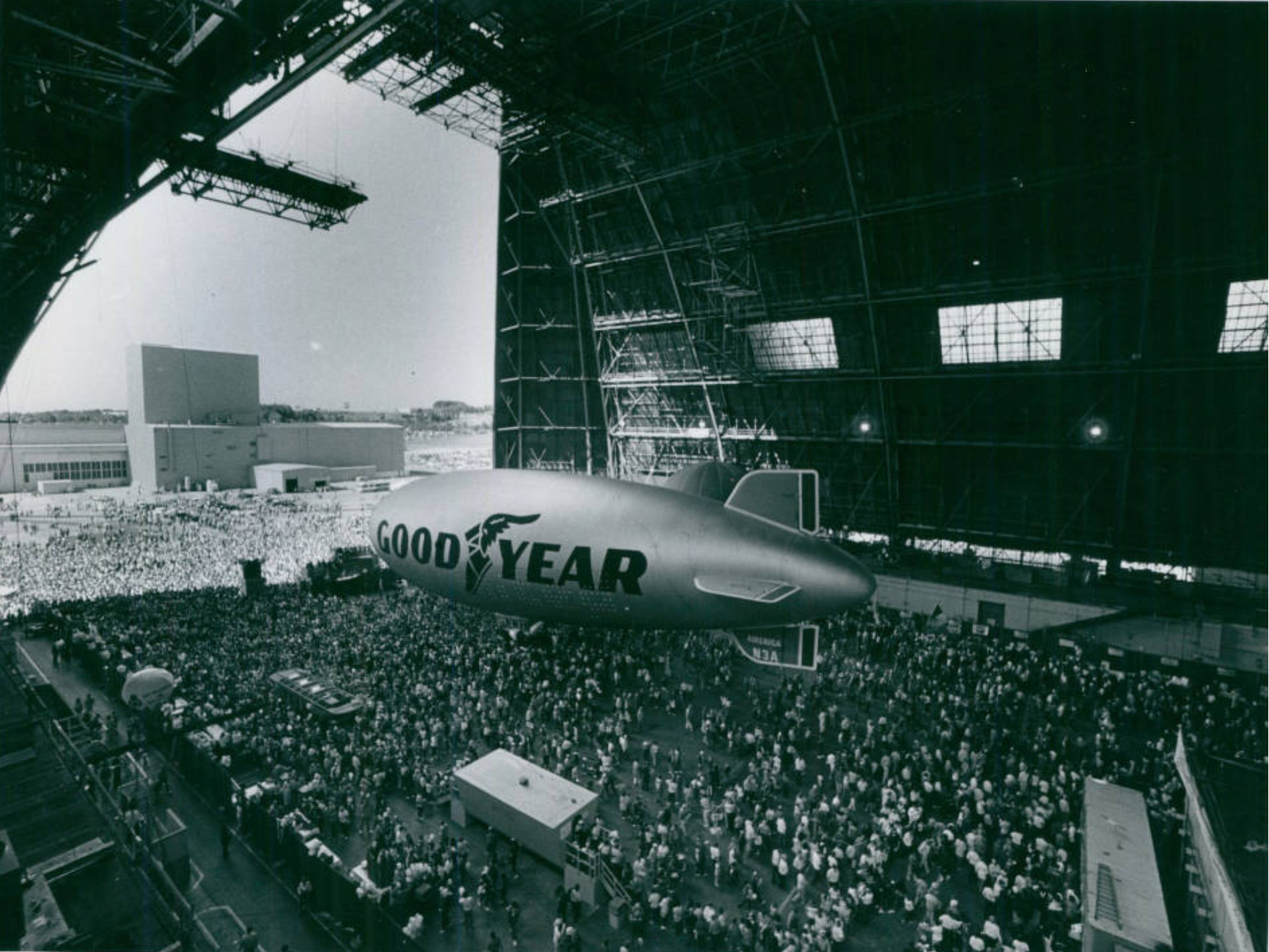
Goodyear opened its airdock to the public on Sept. 13, 1986.  Six days later, Sir James Goldsmith bought his first Goodyear shares and the takeover attempt was on.
Goodyear opened its airdock to the public on Sept. 13, 1986 for a United Way promotion. Six days later, Sir James Goldsmith bought his first Goodyear shares and the takeover attempt was on.

By Stuart Warner

Change was on the way to the Beacon Journal and Akron in 1986.

On Sunday, March 30, Executive Editor Dale Allen headed south on I-77 to the Akron-Canton Airport to meet Knight Ridder Vice President Larry Jinks. 

“A dozen possibilities passed through my brain, most of them making no sense at all,” Allen wrote in his unpublished memoir about the summons from his boss. Was he being moved out of the newsroom?  To another paper? Maybe they were going to fire him.

But there was one possibility he hadn’t considered: He was offered the job as editor of the paper.  Corporate had been unhappy with the bickering between Editor Paul Poorman and General Manager Jim Gels and was replacing both of them.  Gels was shipped to the company’s paper in Duluth, Minn.,  to replace publisher John McMillion. McMillion was coming to Akron as the paper’s first publisher since Ben Maidenberg retired in 1975.  Poorman was offered another job at the Beacon, but decided to resign.  The job was Dale’s if he wanted it.  He did.

Tim Smith, who had been promoted to managing editor by Poorman, also left to teach at Kent State as Allen ascended to the top spot. 

“Dale sat between Tim Smith and Paul Poorman, not fully in charge of the newsroom,”  recalled John Greenman, then the Beacon’s assistant managing editor for metro news.  “When Smith and Poorman left, Dale was free to reframe the newsroom to take advantage of the people he’d hired and promoted and, as importantly, to reorient (or relieve) veterans from the Kent State coverage, who’d become smug and lacked intensity.”

Dale found just the right person to bring a new intensity to the newsroom at his former paper, the Philadelphia Inquirer.

Larry Williams was a rising star in Knight Ridder.  His degree was in engineering, but his passion was journalism. He joined the Inquirer  in 1971, advancing to business editor, where he supervised two Pulitzer Prize-winning projects, including the coverage of the near-disaster at the Three Mile Island nuclear plant.  “He turned what had been a small undistinguished business news department into one of the nation’s best,” said Gene Roberts, legendary former editor of the Inquirer. “But his influence on the paper went far beyond business news into major investigative reporting and the design and layout of the paper. His talent and drive were exceptional.”

Tim Smith had supervised only metro news and the copy desk as managing editor. “Dale … delegated vast authority” to Williams, Greenman said. “Larry would not have come to Akron without it. Indeed, he turned down the job of Sunday Business Editor of the New York Times to come to the Beacon Journal.”

I was the Beacon’s local columnist, writing Warner’s Corner, when Larry arrived. I was known mostly for wearing a hat and writing about Stowbillies, Kenmorons and empty storefronts in Akron’s downtown. Not Larry’s kind of journalism. And, oh, yes, I constantly took pokes at “Muffy” and “Buffy” and everyone else who lived in the affluent suburb of Hudson, where Larry and his family bought a rambling Colonial-style home.  My Hudson humor was often not appreciated by the village’s newest resident. And more than once he killed a column with questionable taste, like the time a politician in Columbus proposed hiring prostitutes to tell people about the danger of AIDS.   I innocently wondered how they would fill out an application, including the question, “Position Desired?”

I had no idea of the impact Larry’s hire would have on me and all of us at the paper and, perhaps, on the city of Akron.

Within weeks after Larry joined the paper, financier Sir James Goldsmith bought his first shares of stock in the Goodyear Tire and Rubber Company.  This was a man who described himself as “a bringer of change.”  In Larry Williams, he met his match.

**************

On Monday afternoon, October 7, Business Editor Doug Oplinger noted a sharp rise in Goodyear’s stock.  Oplinger grew up in nearby Springfield Twp., then returned to work for the Beacon Journal after graduating from Northwestern University.  He started in Akron as a metro reporter, moved to the business desk when it consisted of only three people and had been promoted to business editor just a few months before Larry Williams arrived.  Oplinger stayed at the paper until he retired as managing editor in 2017 after 46 years at the Beacon.

His institutional knowledge told him something was up when the stock closed at a 15-year high of almost $37 at the end of the trading day.

“In Akron, just about everybody had a relationship with a tire company,” Oplinger told Bowling Green State University years later.  “We were the rubber capital of the world.  We had for major companies here and Goodyear, by far, was the largest employer.  It was tens of thousands of people who had a direct connection to the company.”

Oplinger assigned reporters Rick Reiff and Larry Pantages to write a brief story for the Tuesday paper about the uptick and the rumor that a New Jersey chemical company, GAF Corp., was making a play for the tire company.

The activity created enough concern at Goodyear for chairman Robert E. Mercer to send a letter to all employees saying that the company is closely watching the stock market,” they wrote.

There was reason for concern but it originated far from the Jersey shore.

On Friday, Oct. 17, someone purchased 2.1 million shares of Goodyear stock.  By that time, the Beacon’s business department was at full throttle, sometimes updating stories and changing headlines every few hours. Larry Williams became a driving force behind the coverage.

 “The story could not have been made more appealing to Larry,” Dale Allen wrote in his unpublished memoir. “He understood the language of finance;  terms I had read a few times but had not a clue what they meant. Arbitrageurs, junk bonds, leveraged buyouts – these were the things we read about that happened on Wall Street and other financial centers, but not in little old Akron, with its folksy title as the Rubber Capital of the World.

Dale noted that Larry found a willing partner in Oplinger, a fellow Eagle Scout. “Bringing Doug together with Larry Williams was like touching a match to a gentle mixture of  kerosene and enthusiasm,” Allen wrote. “It seemed Doug had been waiting his whole career to find someone to light his fuse, to provide him with clarity and purpose, even if he did not really need much of a kick start.”

Together, and with the help of editors like John Greenman and Deb Van Tassel from Metro and more than 50 staffers, they produced the kind of news coverage that you’d expect to find in the Wall Street Journal, not the Akron Beacon Journal.

“Larry was modeling the Philadelphia Inquirer’s coverage of Three Mile Island,” recalled Greenman, who later became publisher of Knight Ridder’s paper in Columbus, Ga.

Thirty-nine reporters and eight photographers worked on that coverage, “many for weeks, and most with no days off and little sleep during and beyond the first, weeklong crisis,” recalled Michael Pakenham, associate editor of The Inquirer during TMI, writing 25 years later in the Baltimore Sun.

At the end, the Inquirer wrote a novella-length reconstruction, Greenman said. Many reporters contributed. Steve Lovelady wrote through their drafts, constructing and maintaining the narrative line. One editor, Larry, supervised.

Seven years later, Greenman noted, Larry modeled the Beacon’s efforts after the Inquirer’s.        

************

The coverage ratcheted up after October 25, when British financier Sir James Goldsmith was identified as the potential buyer of Goodyear.

In addition to Goldsmith, Mercer and the other usual suspects like Akron Mayor Tom Sawyer and Congressman John Seiberling, the grandson of Goodyear’s founder, readers of the Beacon were introduced to characters we had never met before:

  • Steve Seigfried, a Goodyear Aerospace engineer who represented the worst of Akron’s fears … he had already been laid off by three other companies. Now his latest job was in jeopardy, too.
  • Jeffrey Berenson, a lead partner in Merrill Lynch’s merger and acquisition group who was identified as the primary architect of the takeover bid.
  • Donald Walsh, a vice president at Akron’s Merrill Lynch brokerage who was feeling the heat from local residents for the corporate parent’s role in fueling the takeover attempt.
  • Rufus Johnson, the janitor at the Goodyear barbershop whose comments about “Rambo time” bolstered the company’s spirits.
  • Mark Blitstein, Goodyear’s director of investor relations, the company’s lead defender.

The business department had only three staffers when Dale Allen had arrived in 1980.  He had tripled the team by 1986, but they were still working around the clock to keep pace with the Goodyear story.

Larry Pantages, Rick Rieff and Greg Gardner were the primary writers, with Glenn Proctor, Katie Byard, Ron Shinn and others taking us behind the scenes of board rooms, union halls and stock exchanges.  The ’80s had ushered in an era of Wall Street greed unseen since the Roaring Twenties, and Akron understood the awful implications of a successful raid on the city’s largest employer. Goodyear assets would be sold off for a quick profit. Research and development and corporate philanthropy would likely be reduced, even halted. Workers would be laid off. The only winners would be Goldsmith, investment bankers and large shareholders with no stake in the city’s wellbeing. The losers would be the community at large.

Pantages remembers the day reporters scored a major coup:  a phone interview with Goldsmith.

“The PR person we called almost every day, Lissa Perlman, had finally come through for us in setting that up. Maybe that was the interview where Goldsmith said, ‘I am a potential bringer of change,’ and we realized from his own lips what the threat to the city and the employees really was. I think he also clarified himself a little by adding something like, ‘I say ‘potential’ because nothing’s happened yet.’”

They rushed back to their desk to write the story for the final afternoon edition.

“When the papers came off the press, we grabbed a bundle and jumped in the car and drove to the Dubl Tyme restaurant right across the street from the HQ. We wanted to give the papers away and get reaction from workers during their lunch break. Much to our chagrin, we went into the place (I think it was me and Greg Gardner; maybe Reiff, too) and there were like three people in there. Not what we were hoping for.”

Business wasn’t the only angle getting coverage.  The government team went full bore, with Bill Hershey reporting from Washington, D.C., Mary Grace Poidamani from Columbus and Charlene Nevada from Akron City Hall.  Meanwhile metro reporters like Terry Oblander, Laura Haferd, Jim Carney and others were producing stories that showed the impact of the takeover bid on the community. Stories like:

  • A church in Akron refusing to sell its 100 shares of Goodyear stock even though it needed $150,000 to buy a new roof.
  • High school students starting a stock-buying campaign and writing letters to Congress and to Merrill Lynch.
  • Joan Lukich, whose family had more than 200 years combined service at Goodyear, wearing a sandwich board and walking the streets of Akron, urging citizens to buy the company’s stock.  “United We’ll Stand, Divided We’ll Fall,” was her message.

Gaylon White, a Goodyear PR exec, was reading every word.  The former journalist was assigned to study media coverage of takeover attempts, both previous and present.  He said the Beacon Journal’s coverage of the financial angles was almost as sophisticated as he had read in the New York Times and the Wall Street Journal. “But no major newspaper had ever covered the impact on the community like the Beacon did. … You guys ought to win a Pulitzer,” he told me back then.

White had other jobs, too.  He was told by Corporate Communications Director William Newkirk to “be disruptive.”  Goodyear wanted the media to show the public that Goldsmith wasn’t like us.

To that end, White enlisted a lot of help from Warner’s Corner, feeding me stories about Goldsmith’s lascivious lifestyle, shoeshine stand operator Rufus Johnson’s fighting words to Mercer (It’s Rambo time!) and a little item that went ‘round the world: The corporate raider had a distaste for anything rubber, especially rubber bands,

The guy is buying the world’s largest tiremaker and he has a rubber-phobia?  My readers ate it up, especially after I published his New York address and urged them to send him gobs of rubber bands.

Maybe it worked.  By mid-November, Mercer confided to associates that Goldsmith had won, that there was nothing the company could do to prevent the takeover.  Yet a few days later, after facing a raucous crowd of Goodyear workers at a Congressional hearing and taking a tongue-lashing from Sieberling (“Who the hell are you?” he bellowed), Goldsmith walked away from the deal, selling back his stock to Goodyear for a $94 million profit – not bad for 10 weeks work.

Years later, Denis Kelly, a former Merrill Lynch executive, told me he never understood why Goldsmith settled when victory was at hand. “He was not the sort of fellow to back down.”

Then he paused as he recalled the events of those days.

“You know, he really did not like all those bags and bags of rubber bands showing up. That bothered him. He said, ‘Why are they sending me all those rubber bands?’ “

                                                            ****************

The Goodyear War was over on Thursday, November 22, though the reverberations from the takeover attempt would be felt for years to come. The next day, Larry Williams told me I would be the lead writer on a team that would produce a narrative reconstruction of what had just happened.  I wasn’t sure why he chose me, given our disagreements over my columns. Maybe Dale had told him about some of the long-form stories I had written as religion writer. Perhaps it was because of the sources I had developed as the columnist. Regardless, I immediately began clipping and reading every story we had written about Goodyear since the day the Airdock was opened in September.  

That weekend he and I met at the office and put together a detailed outline.  Monday morning, November 24, we went to work.

By Monday evening, I was, in sports parlance, choking.  Looking back now, the task we faced then seems almost impossible.  Our goal was to fill an eight-page section with 15,000 to 20,000 words, much of it new reporting.  And we had less than a week to finish.  The section was scheduled to hit the newsstands on Sunday, Nov. 30, three days after Thanksgiving.

I was sensitive about my role on the project.  The other reporters on the team were Melissa Johnston from the metro staff, Reiff and Pantages. Williams, Oplinger and Greenman were the editors.

There was also resentment among the other business writers who had been covering the story 24/7 for several weeks that I was on the team at all.  And I admit, I had no idea how to spell or pronounce arbitrageur before I began the assignment.  I thought a raider played for Oakland.

Maybe that is why I found myself struggling to find any words at all as I began to write the first chapter that Monday afternoon on my Commodore 64 in my home office.  By midnight I still had nothing.  By 2 a.m. Tuesday I had deleted blocks and blocks of copy.  The green screen was still blank.  My wife, Deb Van Tassel, told me to go to bed, start again tomorrow.  I couldn’t do that.  I couldn’t face the rest of them with empty pages. By 5 a.m. I was fading fast.  Sometime between 5:30  and 6 a.m. I fell asleep on the couch next to my desk with not a word written.

I awoke re-energized and at dawn on Tuesday, Nov. 25.  I started writing again at 7 a.m.  The nap had re-energized me.  By 9 a.m. I had a full draft of the first chapter.  The solution had been simple.  On Saturday, Sept. 13, 1986, Goodyear opened its airdock to the public for the first time in more than 50 years, according to news reports.  More than 300,000 turned out to watch.  Traffic was so bad that space hero John Glenn couldn’t reach the site.  I placed each of the main characters at that moment in time in the drama that would play out as The Goodyear War.  And the story began like this:

“The sun seemed to be shining on Akron as it had few times in recent history.

“At a few minutes past 11 a.m., the 600-ton front doors of the Goodyear Airdock began sliding apart ever so slowly.

“Hearts pounded as fast as the Akron’s Symphony Orchestra’s timpani drums rising to the first crescendo of the theme from 200l: A Space Odyssey.

“Men and women cried.

“It was a day to remember where you were.”

I showered quickly, got to work by 9:30 a.m., and no one on the team had any idea that I had pulled an all-nighter.

From there, the rest of the narrative started to flow.

I went to work on chapters two and three, which introduced our two main characters, raider Goldsmith and Goodyear’s Mercer. 

As they continued to report, Reiff and Pantages worked on chapters four through six, which took us into this new world of finance that most of us knew little about. Yet they made it understandable for the folks in Akron.  An excerpt:

“As the Goodyear rumors were circulating, another takeover battle was ending that would dramatize the new power of corporate raiders and portend bad news for Goodyear.

“Campeau Corp., a Canadian real estate firm, as in the process of a successful hostile takeover of the much bigger Allied Stores chain.  Campeau’s revolutionary weapon was an equity contribution, some $1 billion from its investment banking firm, First Boston Corp.  This was a departure from the usual takeover, in which a raider relied primarily on borrowing (often ‘junk bonds’) to pay the costs of a tender offer for all or some of the target company’s shares.  The risk arbitrageurs, financial pros who invest in stocks of targeted companies, had to decide whether the potential reward of lining up with the raider offset the risk a deal would fall through.”

Six months earlier, not many of us would have had a clue what that meant.  Now it was dinner conversation in Akron.

Still, there seemed an insurmountable among of work to finish by our Saturday night deadline.

Melissa Johnston continued to interview people in the community as I wrote.  Pantages and Reiff scored an interview with Mercer, who accounted the most minute details of his lunch meeting with Goldsmith at the financier’s New York townhouse.

“Several bottles of wine were nearby in buckets,” they wrote.

“Goldsmith offered some to Mercer.  He declined. ‘I don’t like to drink at noon,’ Mercer told Goldsmith.

“’Would you care for some water?’ Goldsmith asked.

“’That would be helpful,’ Mercer said.

“’Fizzy or otherwise,’ Goldsmith asked.

“’Otherwise,’ Mercer replied.”

Getting that kind of detail while still writing took time.  We were working past midnight every day but by late Wednesday we realized we’d have to work through Thanksgiving Day, even if we already had plans.

“I remember walking into the newsroom at mid-morning on Thanksgiving Day  to check on the story’s progress,” Allen recalled in his memoir. “The first person I saw was Larry Williams, his feet propped up on a desk in the middle of the newsroom, sound asleep, a file folder crammed with notes strewn across his lap. He had been at the paper throughout the previous night. For Larry, that was probably a very exciting way to spend Thanksgiving.”

Williams did give us two hours off in the afternoon to have dinner with our families.  I remember swallowing some turkey and mashed potatoes with my wife and our 2-year-old, who most people knew then as Baby Corner.  Then I must have crashed for a nap.  Once again I was refreshed and back in the office by 5 p.m.

We continued to write until 4 o’clock Friday morning, completing all 11 chapters, some 20,000 words.

All that was left when we returned at noon was the final edit.  Piece of cake, I assumed, even though I hadn’t had time for any cake or pie on the holiday.  I was used to my copy sailing through the desk.  How long could this take?  Three or four more hours and we’d be done, I thought.

I’d never experienced the kind of deep dive into a story Larry Williams put us through for the next 20 hours.  He questioned every assertion, wanted more information for every … .  It was a clinic in professional editing.

But there were seven of us working on the final draft, and I know that when everyone tries to put his own fingerprints onto the text it can spoil a good story, so  I sat down at the editing terminal and refused to budge through revisions of the first few chapters.  I also said something else that did not endear me to my colleagues. “The first three chapters (which I had written) are in really good shape.  Why don’t we speed things up by starting at chapter four?”

Uh, no.  Larry Williams was not about to skip over a single word.  We started with page one, line one, and worked our way meticulously through the draft, six others talking while I typed in most of their suggestions.

As the hours passed that night into morning, we discovered that chapter eight, which I hadn’t written, was based on a false premise, and had to be totally revised.  I finally relinquished my seat and sacked out on a nearby couch as the other six hashed through a couple of thousand words.

By chapter nine, I was ready to go again and managed to regain control.  But as we approached the finish, I realized we had no ending.  Writers struggle over their lead, but often forget the significance of a great finish.  I had nothing.  Was I going to face another writer’s block?

Then one of my colleagues noted that Goldsmith had never been to Akron through the ordeal.

And there was our walk-off.

“Left behind was testimony to the enormous power of Goldsmith’s brand of capitalism,” we wrote. “He had terrified Akron without ever once setting foot in the city.”

 *************

We finished the final draft at 8 a.m. on Saturday, Nov. 29. Then it was time for Executive News Editor Bruce Winges, Art Director Art Krummel, Assistant Managing Editor for News Colleen Murphy and their staffs to take over. Copy editor Mickey Porter line edited every word, with Larry Williams at his side, struggling to stay awake.

They had already begun some preparation earlier in the week, but they had no idea how much clay they would have to mold until they arrived much earlier than usual that day.  Typically, Saturday nights are slow, most of the pages for the Sunday paper prepared in advance.  But when Deb Van Tassel and I stopped by 44 E. Exchange St. that evening, it was as busy as an Election Night, with copy editors, page designers and artists, not to mention all the folks in the composing room, scurrying to make their 11 p.m. deadline.

The final product was simply outstanding.  The layout of the eight-page section was clean, bold.  The photos, surrounded by a gray border, jumped off the page.  Artist Dennis Balogh’s Page 1 illustration captured the turmoil of the previous 10 weeks.  And the headline said it all: “The Goodyear War … Hard to tell the winner from the loser.”

I guess our readers appreciated it, because we reprinted thousands of copies of the special section.  We also sent copies of the section to journalists around the country.  In those days before the internet, that was the only way to promote your own work, and we thought others might take notice.

They did.

Dale Allen was on the Pulitzer Prize Jury in March of 1987, one of dozens of journalists judging the best work of the previous year in the different categories.  Dale was among the jurors judging the photography entries, but during a break for lunch he got some unexpected news.

“Seated next to me was an editor, whose name I have forgotten, who was a member of the jury charged with selecting the winner in the local general reporting category,” Dale wrote in his memoir.  “It was in that category that we had submitted our coverage of the attempted takeover of Goodyear by Sir James Goldsmith.

“I had never met the juror before but, when we made our introductions, he told me that our Goodyear coverage was among the best he had seen that morning. He said something like this:

 “’I haven’t seen all of the entries yet, but the one you guys submitted was the best I’ve seen so far.’ Then, he added something to the effect that he had never seen a story so well reported in all  his years as a journalist.”

The names of the finalists are supposed to be kept secret, but back then, someone was always leaking them and Dale had a heads-up that we were on the list.  The top three entries in each category are then sent to the Pulitzer’s Board of Directors, which selects the winner. 

And when the prizes were announced on April 17, 1987, Dale already knew that outcome, courtesy of his former boss, Philadelphia Inquirer Editor Gene Roberts. 

I wish he had given me at least a hint because I was out speaking to a community group and missed the initial celebration.  But since Publisher John McMillion wouldn’t bend his policy of no alcohol in the newsroom,  I was back in time when the champagne bottles were uncorked at the Cascade Holiday Inn that evening.

At first, the festivities seemed a little subdued; I thought it should be a little more like my days in sports, where the winning teams knew how to party.  So I grabbed a bottle, popped the cork, and dumped the bubbly over Larry Williams’ head. 

Many congratulatory telegrams followed.  Robert Mercer wrote to Dale Allen: “The Beacon Journal saved Goodyear.”

Maybe. Maybe not.  Because of Goldsmith, Goodyear was never the same company again. To pay for Goldsmith’s retreat, Goodyear had to sell off assets, including the company’s jewel, Goodyear Aerospace, and lay off workers.  Within the next 10 years, it surrendered its crown as the world’s biggest tiremaker to Bridgestone of Japan. 

Goldsmith had changed Akron forever.

Larry Williams brought change to the Beacon Journal newsroom as well.  He only remained at the paper for three years before he was promoted to Knight Ridder’s Washington bureau.  He died at age 74 on Dec. 9, 2019.  But his legacy lives on with those who worked with him, even though not all of us appreciated his impact at the time.

We remained at odds over my column so I never really thanked him for the lessons learned that one long week reconstructing the Goodyear siege.  But when I returned to editing a few years later, I hope I was able to infuse at least some of the same kind of passion and attention to detail into the writing of my reporters.

Others had a similar experience.

“I remember telling Dale that Larry put me into therapy,” John Greenman recalled about his daily story meetings with the managing editor.

“’But you became a strong assigning editor,’ Dale said.

“True enough.”   

Indeed we were all better off for the experience.

Syllabus for ENG 306

SYLLABUS
CREATIVE NONFICTION – Literary journalism
ENG 306 Fall 2009
WEDNESDAYS 4 p.m.-6:30 GUILFORD 323
Lecturer: Stuart Warner

 Office hours: Guilford 316
Mondays & Wednesdays, 1-3 p.m.
and by appointment
E-Mail: warnercorn@msn.com
Web page: thewritecoachonline.com

blog: www. thewritecoach.wordpress.com

office phone: 216-368-2371

COURSE OUTLINE

This is a course for serious nonfiction writers. Literary journalism combines the writing techniques of fiction with the rigorous demands of accuracy in journalism. I’m leery of the term creative nonfiction because that seems to imply that writers can be creative with the facts. Not in this class. Reporting is the backbone of all good writing and you will be expected to report your stories with the same attention to detail as any newspaper journalist. Fine writing is expected, but you will also be expected to understand the techniques that make this writing resonate with readers. This class will focus on the disciplines of literary journalism that has produced award-winning series at The Plain Dealer such as The Burden of Innocence, Beyond Rape, The Inheritance, Johanna: Facing Forward and Bernard’s Story as well as such nationally reknown stories as Seabiscuit, The Soloist and Mrs. Kelly’s Monster. But we will also review narratives produced by college students while they were working as interns with me. The class will be directed to help you produce a 3,000-word narrative that would be worthy of publication. I am confident that working together we can do that.
 

READINGS (PARTIAL LIST)

Elements of Style, Strunk and White (recommended but not required)
Writing for Story, Jon Franklin
Seabiscuit: An American Legend, Laura Hillenbrand
The Soloist, Steve Lopez
Other assigned readings provided by instructor

GRADING
Grades will generally be based on the following scale
Final paper (3,000 words) – 35 percent
Other assigned writings – 25 percent
Mid-term exam on narrative terms – 25 percent
Class participation – 10 percent
Journals – 5 percent

RULES OF THE CLASS

Deadlines cannot be compromised. Assignments turned in late without a doctor’s excuse will not be accepted. Students will be held to professional standards with regard to spelling and factual errors, both of which will result in grade reductions. Students will also be expected to adhere to the grammatical rules outlined in Elements of Style. Plagiarism, fabrication or any other egregious ethical breach of professional standards shall be dealt with most severely.


SCHOOL POLICY ON ACADEMIC DISHONESTY

All forms of academic dishonesty including cheating, plagiarism, misrepresentation, and obstruction are violations of academic integrity standards. Cheating includes copying from another’s work, falsifying problem solutions or laboratory reports, or using unauthorized sources, notes or computer programs. Plagiarism includes the presentation, without proper attribution, of another’s words or ideas from printed or electronic sources. It is also plagiarism to submit, without the instructor’s consent, an assignment in one class previously submitted in another. Misrepresentation includes forgery of official academic documents, the presentation of altered or falsified documents or testimony to a university office or official, taking an exam for another student, or lying about personal circumstances to postpone tests or assignments. Obstruction occurs when a student engages in unreasonable conduct that interferes with another’s ability to conduct scholarly activity. Destroying a student’s computer file, stealing a student’s notebook, and stealing a book on reserve in the library are examples of obstruction.


OVERVIEW
This is a rough outline of the topics will be covered and subject to change. Individual reading assignments will be updated weekly . And once again, there will be a current events or reading quiz at every class.

Week 1 – Introduction: What is literary journalism and opening the writer’s vein.
Week 2 – Narrative by the numbers – the terminology of literary journalism. .
Week 3 – The reported essay. Discussion with Pulitzer winning columnist Connie Schultz (Subject to speaker’s availability..
Week 4 – Seminars on writing that I give to professional writers: Be Your Own Coach and The Writing Process (focusing on Bernard’s Story). .
Week 5 – First writing assignment due; read aloud. Discussion of story present and back story (Frank Sinatra Has a Cold).
Week 6 – Analyzing the Narrative: Mrs. Kelly’s Monster. Organization..
Week 7 – Scene construction; getting inside characters head, dialogue vs. quotes. Assignment due on reporting a scene. Review of terms.
Week 8 – Test on applying narrative terms. Discussion of topics for final paper..
Weej 9. Reporting the narrative. Discussion of Seabiscuit
Week 10 – More reporting the narrative … Beyond Rape. (pending speaker availability). Outlines due for final paper.
Week 11 – The Personal Story. The Soloist. Getting into a character’s head..
Week 12 – The finer points; point of insight, foreshadowing, reconstruction.
Week 13 – Reporting and writing time for final papers
Week 14 – Schedule office time to review draft of final papers. Draft must be completed.
Week 15 – Revising time
Week 16 – Final papers due.

Syllabus for ENG 204

INTRODUCTION TO JOURNALISM
ENG 204 Fall 2009
MONDAYS 4 p.m.-6:30 GUILFORD 323
Lecturer: Stuart Warner

 Office hours: Guilford 318
Mondays & Wednesdays, 1-3 p.m.
and by appointment

E-Mail: warnercorn@msn.com

Web page: www.thewritecoachonline.com

office phone:  216-368-2371


COURSE OUTLINE

Journalism is changing as rapidly as I write this syllabus. A newspaper closes. A hundred new bloggers began reporting the news. This course will not focus on the traditional platforms of presenting the news, i.e., newspapers, radio, TV, magazines. Instead, the focus will be on journalism, why what it was and what it might be. The goal of the class to to help students begin developing tools that journalists will need — good reporting and writing, objectivity, ethics – no matter what the medium. The heaviest emphasis will be on writing skills. Maybe more importantly, by the end of the semesters, students should become better-informed consumers of news. To that end, students will be quizzed every class either on current events or on reading assignments. Students who miss class without a doctor’s excuse must arrange for make-up quizzes. More than two unexcused absences will result in a lowered grade. Class participation will also factor heavily in grades. Journalists, whatever medium, must be curious and learn to ask direct questions.

READINGS (PARTIAL LIST)
 

Elements of Style, Strunk and White
Journalism: Who What When Where Why and How, James Stovall
A Writer’s Coach, Jack Hart
Sunday New York Times (subscription or online)
Other assigned readings

GRADING
Grades will generally be based on the following scale
Final story (1,500 words) – 25 percent
Other assigned writings – 35 percent
Quizzes – 20 percent
Elements of Style test – 10 percent
Class participation – 10 percent

RULES OF THE CLASS
Deadlines cannot be compromised. Assignments turned in late without a doctor’s excuse will not be accepted. Students will be held to professional standards with regard to spelling and factual errors, both of which will result in grade reductions. Students will also be expected to adhere to the grammatical rules outlined in Elements of Style. Plagiarism, fabrication or any other egregious ethical breach of professional standards shall be dealt with most severely.

SCHOOL POLICY ON ACADEMIC DISHONESTY
All forms of academic dishonesty including cheating, plagiarism, misrepresentation, and obstruction are violations of academic integrity standards. Cheating includes copying from another’s work, falsifying problem solutions or laboratory reports, or using unauthorized sources, notes or computer programs. Plagiarism includes the presentation, without proper attribution, of another’s words or ideas from printed or electronic sources. It is also plagiarism to submit, without the instructor’s consent, an assignment in one class previously submitted in another. Misrepresentation includes forgery of official academic documents, the presentation of altered or falsified documents or testimony to a university office or official, taking an exam for another student, or lying about personal circumstances to postpone tests or assignments. Obstruction occurs when a student engages in unreasonable conduct that interferes with another’s ability to conduct scholarly activity. Destroying a student’s computer file, stealing a student’s notebook, and stealing a book on reserve in the library are examples of obstruction.

OVERVIEW
This is a rough outline of the topics will be covered and subject to change. We may take a trip to a traditional and non-traditional news rooms, based on availability. Individual reading assignments will be updated weekly . And once again, there will be a current events or reading quiz at every class. Unannounced quizzes on reading assignments will also be given.

Week 1 – Introduction: Does journalism matter anymore?
Week 2 – The day we were all news consumers: Discussion with reporter who got inside the police barriers at 9-11 plus discussion of first three chapters of Stovall.
Week 3 – (after holiday) The history of journalism. How we got here.
Week 4 – Two case studies (subject to availability of speaker). First writing assignment due.
Week 5 – Test on Elements of Style; Discussion of Ethics and Standards
Week 6 – Begin discussion of Jack Hart’s book: A Writer’s Coach;
Week 7 — Reporting/Interviewing
Week 7 – Organizing/Finding Focus; Deadline writing test
Week 8 – (after fall break) Writing the draft: seminar on writing the lead
Week 9 – Twitter writing assignment due; Polishing: 10 steps to being your own coach
Week 10 – Tentative … visiting news rooms new and old
Week 11 — New directions: How will the news be presented. Outline for final paper due.
Week 12 – Opinion writing, blog writing, guest speakers
Week 13 – Drafts of final paper due … will schedule individual review sessions
Week 14 – Final papers due

Syllabus: ENG 309

                                                SYLLABUS

WRITING FOR NEW MEDIA

ENG 309; Spring 2010

M-W-F  2 p.m.-2:50  GUILFORD 317

Lecturer:  Stuart Warner                                                      Office hours:  Guilford 318

                                                                                                Wednesdays, 11:30 a.m.-2 p.m.

                                                                                                and by appointment               

E-Mail:  warnercorn@msn.com                                                                                                   Web page: www.thewritecoachonline.com

Blog: www.thewritecoach.wordpress.com


COURSE OUTLINE

            Journalism is changing as rapidly as I write this syllabus.  A newspaper closes.  A hundred new bloggers began reporting the news.  This course will not focus on the traditional platforms of presenting the news, i.e., newspapers, radio, TV, magazines.  Instead, the focus will be on writing for new media – and maybe even creating some of our own. The  emphasis will be experimentation.  Every student will be required to keep a blog and to report on an even using Twitter.  We will also try to create a class Facebook page on writing for new media.  We will also study Search Engine Optimization.   Through it all, though, we will continue to emphasize what is good journalism, including libel and ethics. Each student’s blog will be covering a specific area of campus life.  Fridays will be devoted to reporting on that beat.  Students who miss class without a doctor’s excuse must arrange for make-up quizzes.  More than two unexcused absences  will result in a lowered grade.   Class participation will also factor heavily in grades.  Journalists, whatever medium, must be curious and learn to ask direct questions.  Quizzes may be given on the reading material at any time without notice.

READINGS (PARTIAL LIST)

Elements of Journalism, Kovach and Rosenstiel

Journalism Next, Mark Briggs

Elements of Style, Strunk and White (recommended by not required)

Other assigned readings

GRADING

Grades will generally be based on the following scale

Final project– 25 percent

Mid-term  – 20  percent

Blogs – 20 percent

Twitter assignments – 15

Quizzes – 10 percent

Class participation – 10 percent

                                                RULES OF THE CLASS

Deadlines cannot be compromised.  Assignments turned in late without a doctor’s excuse will not be accepted.  Students will be held to professional standards with regard to spelling and factual errors, both of which will result in grade reductions.  Students will also be expected to adhere to the grammatical rules outlined in Elements of Style. Plagiarism, fabrication or any other egregious ethical breach of professional standards shall be dealt with most severely.

                                    SCHOOL POLICY ON ACADEMIC DISHONESTY

All forms of academic dishonesty including cheating, plagiarism, misrepresentation, and obstruction are violations of academic integrity standards. Cheating includes copying from another’s work, falsifying problem solutions or laboratory reports, or using unauthorized sources, notes or computer programs. Plagiarism includes the presentation, without proper attribution, of another’s words or ideas from printed or electronic sources. It is also plagiarism to submit, without the instructor’s consent, an assignment in one class previously submitted in another. Misrepresentation includes forgery of official academic documents, the presentation of altered or falsified documents or testimony to a university office or official, taking an exam for another student, or lying about personal circumstances to postpone tests or assignments. Obstruction occurs when a student engages in unreasonable conduct that interferes with another’s ability to conduct scholarly activity. Destroying a student’s computer file, stealing a student’s notebook, and stealing a book on reserve in the library are examples of obstruction.

OVERVIEW

This is a rough outline of the topics will be covered and subject to change.  We may take a trip to a non-traditional news rooms, based on availability.  Individual reading assignments will be updated  weekly .   And Unannounced quizzes on reading assignments will also be given.

Week 1 – Introduction: Does journalism matter anymore? (No class Friday, Jan. 15)

Week 2 – What is good writing.  (No class Mon., Jan. 18)

Week 3 – More on writing style, developing an online attitude.

Week 4 – Getting started on your blog, Facebook page.

Week 5 – How to blog covering a beat (guest speakers)

Week 6 – Microblogging (Twitter, et al)

Week 7 – Discussion of Elements of Journalism

Week 8 – Mid-term exam on Elements of Journalism (3 essay questions, in class)

Week  9 –  (after spring break) Search Engine Optimization

Week 10 –  Using video, audio, etc   (Twitter project due)

Week 11 – Going Mobile

Week 12 – Social networking … how can we use it more.

Week 13 – Drafts of final paper due … will schedule individual review sessions

Week 14 – Polishing final papers, blogs completed

Week 15 – Final papers due