By Stuart Warner
Thousands of spectators crowded into downtown Owensboro, Ky., on Aug. 14, 1936. Some climbed onto rooftops for a better view.
They had come to watch a man hang.
Rainey Bethea’s death is widely regarded as the last public hanging in America.
Ninety years later, Kentucky.com posted a photograph of the spectacle on its Facebook page. Readers quickly responded. Many gleefully.
“I’ll have the popcorn,” wrote one, adding two smiling devil emojis.
“Make it the halftime show of the army/navy football game,” suggested another.
Maybe Pete Hegseth, secretary of the How to Lose a War Department, is onto something.
Hegseth announced plans to livestream the execution of Nidal Hasan, the former Army psychiatrist convicted of murdering 13 people and wounding 32 others at Fort Hood, Texas, in 2009.
The execution is scheduled for Dec. 3.
The proposed method? A firing squad.
But why settle for one televised execution when there’s an entire entertainment franchise waiting to be created? We could have revenue streaming, too.
Consider the possibilities:
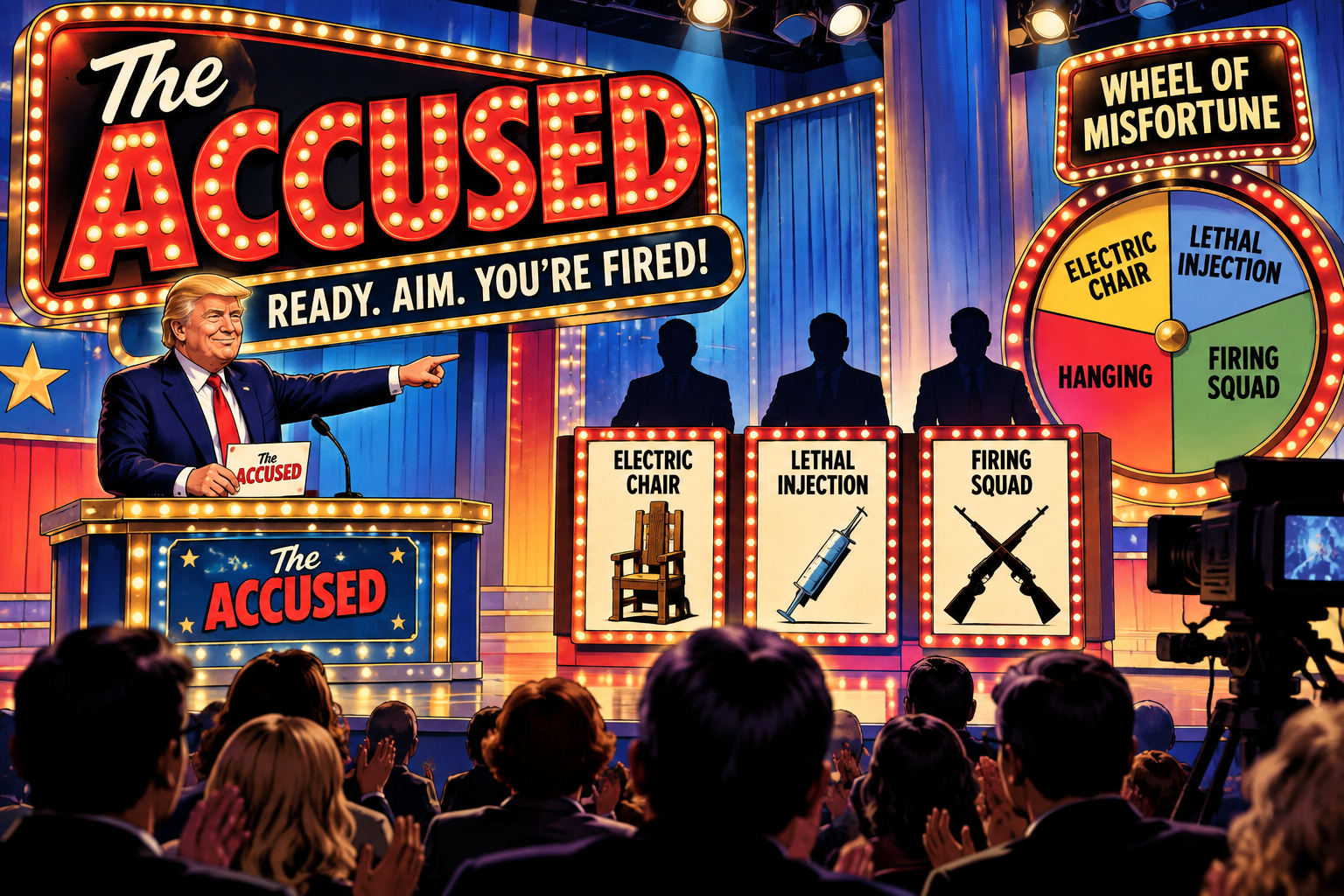
The Price Is Right. Contestants bid on premium viewing packages. Front-row seats. Commemorative blindfolds. Maybe even a chance to meet the firing squad. Proceeds benefit President Donald Trump’s White House ballroom and help finish the border wall.
Wheel of Misfortune. Spin the wheel to select the method of execution. Electric chair! Lethal injection! Hanging! Firing squad! Sorry, no bankruptcies. Only fatalities.
Double Jeopardy! Categories include Crime and Punishment, Famous Last Words and American History.
The contestants have already been convicted, so the answers don’t matter much.
And finally, the biggest show of them all.
The Accused.
Donald Trump returns to the format that made him a television star. Instead of aspiring executives competing for a job, convicted murderers compete for their lives.
The president sits behind his desk, studies the contestants and delivers his verdict.
“YOU GET THE FIRING SQUAD!”
Turn on the applause sign.
Break for commercials.
Pass the popcorn.
Of course, there’s one small problem with turning executions into entertainment.
People don’t always die on cue.
On Sept. 30, Tennessee prison officials attempted to execute Christa Pike, who had been convicted of a brutal 1995 murder.
They administered two doses of pentobarbital. But Pike kept breathing. Witnesses reported that she snored and occasionally lifted parts of her body from the gurney.
An ambulance eventually took her to a hospital.
She survived.
Imagine watching that unfold on live television.
What would the announcer say?
“We’re experiencing technical difficulties. Please stand by.”
And Tennessee is hardly alone. Electrocutions have required repeated jolts. Hangings have gone wrong. Lethal injections have left condemned prisoners struggling to breathe as executioners tried to finish the job.
A firing squad might be quicker. But bullets are no guarantee of an instantaneous, painless death.
I have written about the death penalty before. Nine years ago, I approached the subject from a rather different direction. (Full column in comments.)
My beloved beagle, Tyrone, was nearly 13. He had cancer, and his suffering had reached the point where my wife and I faced a decision no pet owner wants to make.
I took him to a veterinary hospital in Phoenix.
The veterinarian inserted a catheter into Tyrone’s front leg, then left us alone to say goodbye.
I talked to my old friend about the hundreds of miles we had walked together, about the coyotes we’d encountered, the rattlesnake and the jumping cholla cactus.
I cried. Tyrone looked up at me.
When the veterinarian returned, Tyrone was lying on a green blanket. I scratched him behind the ears as the doctor administered a sedative, followed by the medication that stopped his heart.
“Good-bye, buddy,” I told him. “You were a good boy.”
I cried all the way home.
But Tyrone hadn’t suffered. He had died peacefully, surrounded by people who loved him.
And I found myself asking a question that still troubles me: Why can we give a dog a more humane death than we give a human being?
I understand the anger directed at Hasan. Thirteen people were murdered. Thirty-two others were wounded. Families were devastated. Nothing about the circumstances of his execution should diminish their suffering or the enormity of his crimes.
And reasonable people can disagree about whether the death penalty is justified.
But surely we can agree on something more fundamental. If the government is going to take a human life, it has at least a moral obligation and perhaps a constitutional one to do so with as little suffering as possible.
Not with the largest possible audience or corporate sponsors.
Not as the halftime show of a football game.
Now, look at that photograph from Owensboro in 1936.
Thousands gathered around the gallows, waiting to watch a man take his last breath.
Ninety years later, we don’t need to climb onto rooftops or stand in the summer heat.
We can watch from our living rooms. Or from a coffee shop on our iPhones.
We can even make popcorn.
But if we’re going to have executions in America, they should be more humane.
Not more entertaining.
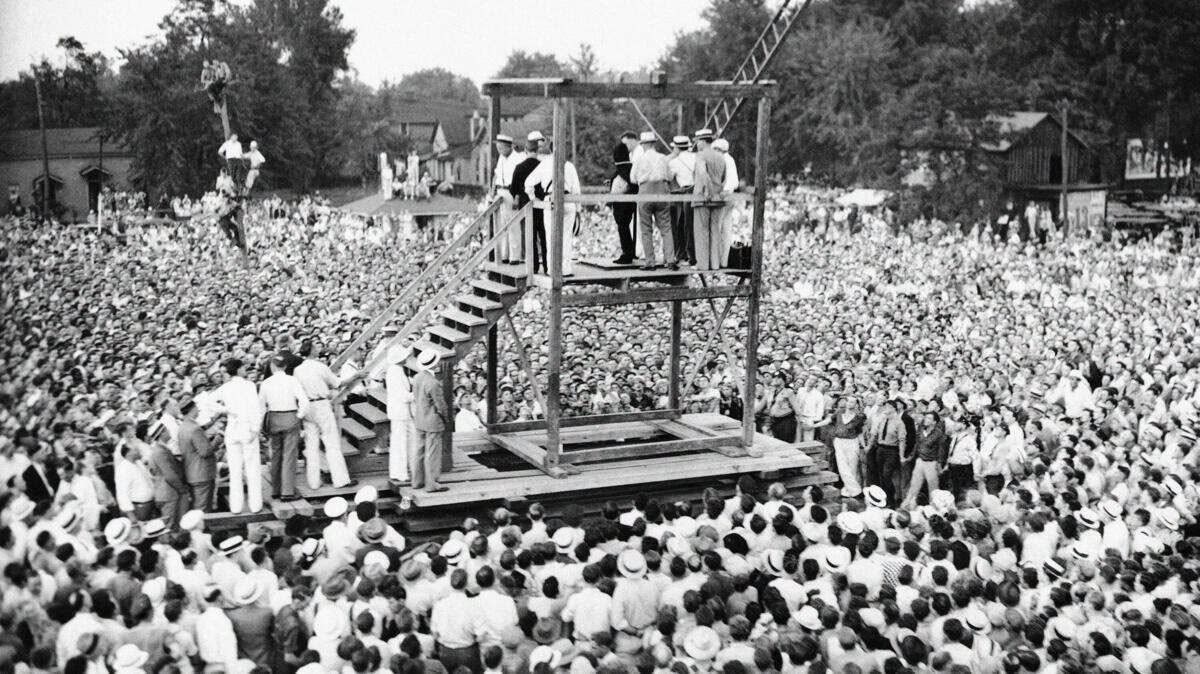
Photo credits: Owensboro, Kentucky, Aug. 14, 1936: A crowd estimated at 20,000 gathers for the public hanging of Rainey Bethea. (Associated Press, via Santa Clara University Digital Exhibits)
Chat GPT-5.6 assisted in the production of this column.


