Stuart Warner can help you write books, write narrative journalism or just write better
Author: Mr. Write Coach
Stuart Warner can help you become a better writer. Warner has developed a national reputation as an editor and journalism teacher. He has written or edited three Pulitzer Prize-winning entries and edited three other Pulitzer finalists As the writing coach at The Plain Dealer in Cleveland, he edited stories than won more than 50 national awards.
Currently, Warner teaches journalism at Case Western Reserve University and is a regular contributor to AOL.com. He has been honored numerous times for his own writing. He has also been invited to speak on writing at the Nieman narrative conference at Harvard, the Let’s Do It Better conference at Columbia University, the National Writers Workshop sponsored by the Poynter Institute, the IRE’s national Computer Assisted Reporting workshop and at Capitolbeat, the national seminar for state government reporters.
He has also worked with the writers at a number of companies, including Politifact, Key Bank, Signal Cleveland, the Akron Beacon Journal, Cleveland Jewish News, Akron General Hospital and also taught at Cleveland State University.
We may not agree on how to pronounce Ghislaine Maxwell, but we can agree that America needs jobs.
Still, we’re not entirely sure we’re on board with President Trump’s latest plan to boost his employment numbers and stimulate the economy:
Work release for child molesters.
You were probably as stunned as we were to learn that convicted sexual predator Ghislaine Maxwell will be granted work-release privileges from her country club, er, minimum-security prison in Texas
And like us, you might also be wondering what Jeffrey Epstein’s former personal groomer is qualified to do.
Never fear. The Department of Justice – whose new slogan is Come for the law, stay for the loopholes – has already circulated some promising opportunities for Ms. Maxwell.
To wit (we hope):
Help Wanted — No Experience Necessary (But It Helps if You Know Prince Andrew)
WHITE HOUSE TOUR GUIDE Lead visitors through history’s halls while dodging inconvenient questions. Excellent opportunity for someone used to explaining away closed doors.
MAR-A-LAGO DOCUMENTS LIBRARIAN Dewey Decimal skills optional. Must be able to work in 98-degree heat, tolerate ketchup stains on government property, and shelve nuclear secrets between Danielle Steel novels.
GIRL SCOUT CAMP COUNSELOR Background check waived for “senior donors.” Applicants should have a working knowledge of s’mores, maritime law and plausible deniability.
PRESIDENTIAL FITNESS TEST COORDINATOR Assess physical health without triggering indictments under the 25th Amendment. Must excel at counting push-ups that never actually happen. Cheating expected on golf scores.
LIBRARY STORY HOUR LEADER
Since the conservatives don’t want drag queens reading to their children, how about a real pedophile?
LOCKER ROOM COMPLIANCE OFFICER Specializing in “hands-on evaluations” for the girls’ volleyball team and providing excuses for any visiting dignitaries found hiding in the showers.
ISLAND CONCIERGE Serve high-net-worth clientele on a private island. Discretion is key. Must be able to mix cocktails, book flights and not testify before Parliament. Works remotely. Very remotely.
CRUISE DIRECTOR Lead luxury yacht excursions for billionaires and heads of state. Must enjoy long walks on the deck, offshore banking, and pretending you don’t recognize anyone from the FBI’s Most Wanted list.
NECKWARE SALES ASSOCIATE Hawk the Epstein brand, making sure they are tied jusssssst right.
But the standout gig for Ms. Maxwell might be:
SPECIAL ENVOY TO THE ALASKA SUMMIT Keep U.S.–Russia relations toasty by ensuring both autocrats get exactly what they want. Handle scheduling, cocktail, and “personal diplomacy” with discretion. Must be comfortable in cold climates and warmer situations.
Picture it: Trump and Putin in leather chairs. Mad Max refills their glasses, smoothing over awkward silences.
TRUMP It’s Guh-lane. Everybody says Guh-lane.
PUTIN Nyet. Jee-lon.
TRUMP Guh-lane!
PUTIN Zhuh-lon!
Then, singing in harmony
“You say Zhuh-lon, I say par-don
“I say Guh-lane, you say Ukraine.
“Zhuh-lon, par-don
“Guh-lane, Ukraine.
“Let’s call the whole war off.”
(beat)
“Nah!!! Just joking.”
AUTHOR’S NOTE: If this travesty allows Maxwell to earn money while ostensibly serving her 20-year sentence, let’s hope all of it goes to her hundreds of victims. (ChatGPT-5 was used in producing this column.)
(sung to the tune of Gilligan’s Island, with bonus commentary by Al InCognito)
Just sit right back and you’ll hear a tale A tale of a tragic flip, That started with some Epstein files And wrecked the MAGA ship.
With Kash Patel and Pam Bondi, too, And Trump the Skipper bold, The loyal crew had pledged they’d name The predators untold.
By Al InCognito, Captain of the Ship of Tools
They said the files were coming. They said the truth would set them free. Instead, they got stranded on Epstein Island.
For years, Trumpworld kept promising the Big Reveal: the files, the tapes, the takedowns. Jeffrey Epstein was the original QAnon campfire tale — the evil at the center of the liberal universe, the sick proof that only Trump could “drain the swamp” of child-trafficking elites.
The fact that Trump was photographed with Epstein, partied with Epstein, and once praised his taste for “beautiful women… on the younger side”? Minor detail. Surely, his disciples said, that would all be explained — once the files were released.
Except now, they’re not being released. The Department of Justice says there’s no blackmail list, no conspiracy, and no coverup. Just suicide by embarrassment.
So now we find ourselves marooned on an island of conspiracy, in a spit-com starring Trump as the Skipper, Pam Bondi as Ginger, Karoline Leavitt as Mary Ann and Elon Musk as the billionaire with everyone as his wife. There are no Professors on this crew, but there’s an abundance of Gilligans trying to understand what just happened as the MAGA Minnow crashed ashore.
SECOND VERSE
The MAGA crew grew restless fast, “The list was promised here!” But all they got was Bondi’s note: “There’s nothing left to clear.”
No client list, no smoking gun, No Clintons to arrest … Now MAGA’s yelling “Deep State lies!” And Trump’s become the guest.
The Knives Come Out
Bondi – the attorney general hand-picked for this mission – now says there’s nothing to see here. Kash Patel, promoted to FBI chief on the Epstein promise, suddenly finds himself in possession of … nothing. Dan Bongino, a man who once sold brain pills between Epstein rants, is threatening to quit over the lack of credible child-abuse content. (A sentence no one should ever have to write.)
Musk, the richest divorced guy in human history, claimed Trump was in the Epstein files – then deleted the post after getting hit with something even more powerful than the truth: no tax breaks for his Teslas.
Trump himself tried to hand-wave the whole thing away: “Are people still talking about this guy?” he asked, blinking like a man who just saw his own reflection in a cell mirror.
And then, like clockwork, he rage-posted a 12-car pileup of words blaming Obama, Hillary, Biden, JFK, MLK, and the laptop from hell – all for writing the Epstein Files, which he claims don’t exist, but were also faked to hurt him, even though they didn’t, which is why they were hidden.
Still with me?
THIRD VERSE
Trump screamed of files Obama wrote, Of Comey’s deep-state sting, Of JFK and laptop plots And Hillary’s email thing.
He begged for calm, but Musk said “nah,” And posted once again: “Trump said Epstein six damn times – Release the files, my friend.”
MAGA V. MAGA
What’s truly poetic is this: Trump is now being eaten alive by the very conspiracy he fed. He taught his followers to sniff out child molesters in every shadow — and now they think he is hiding the monsters.
For once, I agree with Michael Flynn: “The Epstein affair is not going away.” Because it never was about Epstein. It was about power, projection, and weaponized paranoia. And let’s not forget that a lot of young people got hurt on this island of the damned as you sing the sad, final lyrics.
EPILOGUE VERSE
So this is the tale of MAGA’s fall, Of files that went astray, Of promises and QAnon All drifting far away.
With Musk and Flynn and Bondi, too, And Trump who lost the plot, They searched for proof of others’ sins— Then realized what they got …
Here on … EP-stein’s Island!
(ChatGPT 4.0 produced the illustration and assisted in writing the column.)
Ah, Senator Lisa Murkowski. We thought you were a work of art.
Turns out you’re just a piece of … work.
Murkowski, from the great and ghostly state of Alaska, has built a career on being the Republican who almost says no. She agonizes. She winces. She sometimes even sighs. And then she votes yes. If Susan Collins furrows, Lisa Murkowski gazes — stoically, beautifully, into the Arctic distance, hoping someone else will do the hard part.
Some senators break ranks. Lisa files emotional support briefs. She’s the only lawmaker who votes against her conscience then writes a press release apologizing for it.
I once mistook her spine for steel. Turns out it was more of a decorative pipe cleaner. Somewhere between Anchorage and appeasement, Moanin’ Lisa left her conscience on ice.
I listened as the senator tearfully explained why she voted for the Big Beautiful Bill she clearly despised. The bill that legal scholars, civil libertarians, and even a few houseplants agree would turn America into a cheery little autocracy with surveillance apps, prayer mandates and lots and lots of people without healthcare.
“I regret voting for it,” she said. “I was hoping the House would defeat it.”
Ah, yes, the legislative equivalent of “I didn’t want to hit the fire alarm. I was just curious what would happen.”
And so, with apologies to Nat King Cole and anyone who still believes in representation, I found myself humming. Something familiar. Something tragic. And then it hit me.
🎶Moanin’ Lisa🎶 (to the tune of “Mona Lisa”)
Moanin’ Lisa, Moanin’ Lisa, we adored you? Your mystic smile meant we’d never have to pout. But you moaned while casting “yes” votes, hoping no one Would remember how you coldly sold us out.
Did you pray for House Republicans to block it? Was your vote just cover for your heart of doubt? Many hopes were brought to your committee But they just lie there, and they die there.
Are you brave? Are you firm, Moanin’ Lisa? Or just a quiet cog who never stands apart?
(Instrumental break — played on a single, icy cello in a wind tunnel)
Moanin’ Lisa, do you ache for moderation? Or was that just branding on your fundraising mail? Many truths were left outside your chamber But you bowed and let them fail
Are you bold? Are you real, Moanin’ Lisa? Or just a cold and lonely ‘laskan work of art?
I don’t mean to be unkind. I’ve admired Murkowski at times. She bucked Trump. She survived a write-in campaign where spelling counted. She once did the unthinkable and wore something besides red on Fox News.
But there’s a difference between being independent and being indecisive.
This latest stunt — voting for a bill she hoped others would kill — is like handing the arsonist a match and whispering, “I sure hope someone hides the gasoline.”
Senators used to fight for amendments. Now they fight for alibis. “I only voted for it because it had some good parts,” Murkowski explained. Sure. And Titanic had a nice orchestra.
What we’re watching isn’t governance. It’s performance art — a series of gestures meant to reassure voters that the senator feels terribly conflicted about destroying healthcare for millions. A tear here, a raised eyebrow there, and maybe a town hall where she explains that the hand that pushed the button was tired.
But history doesn’t care how conflicted you looked. It only remembers what you did.
And so we’re left with this:
Many dreams have crashed upon your shoreline You just watched them drift and part. Are you warm? Are you real, Moanin’ Lisa? Or just Alaska’s frozen version of a heart?
AL INCOGNITO is the pseudonym of a columnist currently broadcasting from the political tundra, where spines go to hibernate. Subscribe to Moan & Groan Quarterly for more frozen dispatches from the edge.
This picture was worth 1,000 words … or at least enough for an Al InCognito column:
Three kids — two boys and a girl, ages 9 to 12 — zip-tied outside a courthouse in San Antonio. Their wrists bound like they’d stole state secrets, not shown up for a legal hearing they didn’t understand. One had a backpack. One had no shoelaces. None had a lawyer.
And I thought: Summer camp.
Not real summer camp, of course. Not the kind with bug spray and canoes and that one weird counselor who always brought his guitar to lunch. No, this was the kind of “camp” designed by people who call January 6 a “Capitol tour” and believe waterboarding builds character.
The kind of folks who look at a zip-tied 12-year-old and think: Junior’s learning responsibility!
They probably hand out merit badges for “Failure to Appear” and “Looking Suspiciously Honduran.”
Welcome to Campa Gestapa™ — America’s hottest new summer program, where kids are encouraged to flee violence, then punished for surviving.
Imagine the camp brochure:
Camp Rules:
No Parents Allowed: Unless they’re being deported with you. Family separation is so 2018; now we do family detentions.
No Legal Representation: Lawyers are like sunscreen — unnecessary and frowned upon.
No Volleyball: Seriously, you might get arrested if you even go there; ask Marcelo Gomes.
Activities
Arts & Crafts: Create your own I-94 bracelet using genuine zip ties. Just like the San Antonio kids — future felons, obviously.
Storytime: Campers gather ‘round the fire as ICE agents read from the U.S. Immigration and Nationality Act. Spoiler alert: Everyone gets deported in the end, no matter what the Supreme Court says.
Medical Mystery Hour: Guess who’s the kid with cancer! Bonus points if you can identify the child deported without meds.
Deportation Dodgeball: Where the balls are metaphors for due process, and you’re always out.
Borderline Bingo: Match kids to countries they haven’t seen in years!
MAGA Indoctrination Bonfire: Sing patriotic hymns while Counselor Cletus reads aloud from The Art of the Deal.
And everyone’s favorite…
Hide and Seek:
A camp classic! Except you’re always “it,” and ICE agents are the ones hiding — in plain clothes, outside immigration courts, ready to scoop you up post-hearing. Remember how we used to shout “Ollie ollie oxen free!” to say it was safe to come out?
Not here.
Here, it means: We already got your mom.
Fun linguistic fact: not surprisingly, some say the phrase comes from the German “alle, alle auch sind frei” — “all, all, also are free.”
Yeah. That tracks.
And I’m sure the camp songs are fun,
My favorite as a kid was a little ditty by the great Allan Sherman.
It’s still a hit, but the lyrics may have changed:
Campa Gestapa (To the tune of “Hello Muddah, Hello Faddah”)
Where’s my momma? Where’s my papa? I’m all alone now at Camp Gestapa.
ICE told me I would get some recreation, Instead they threatened me with early deportation.
Take me home, oh, Momma, Papa!
Take me home, I hate Gestapa!
Don’t leave me in the cages where
Kids vanish like we’re never there.
Even the music has stopped being funny.
But all the unhappy campers at Gestapa can take comfort from the words of wisdom from Counselor Joni Ernst:
“Well, we’re all going to die.”
ChatGPT 4.0 contributed to the writing and editing of his column and the illustration.
Donald Trump is in full karaoke meltdown mode. In a late-night Truth Social rant, he called for investigations into Bruce Springsteen, Oprah Winfrey, and Beyoncé for the crime of supporting Kamala Harris. Because in Trump’s America, freedom of expression only applies if it’s shouted over a Kid Rock guitar solo.
And poor Bruce. All the man did was release a live EP — Land of Hope and Dreams — featuring a few lines of truth: calling Trump’s last administration “corrupt, incompetent, and treasonous.” That was enough to send the president into full meme mode, reposting a video of himself golfing a ball into Springsteen’s head.
Naturally, I responded with a parody, Weird Al InCognito style … because when Trump rewrites history, we rewrite the soundtrack.
Born in the USA (Big Beautiful Remix)
Lyrics by Al InCognito — with apologies to The Real Boss
Born in a tower, gold-plated and tall
Daddy bought the building; I just named it all
Got a bone spur letter, dodged that war
Still say I’m tougher than a two-dollar whore, now …
Chorus
I was born in the USA
Born in the USA
I was born in the USA
A trust fund baby with a spray tan, hey!
Second verse
Went to a rally screamin’ ‘lock her up!’
Sold some sneakers, blessed a Bible cup
Had a MAGA hat made in Mexico
But I fired the staff when ICE said hello
Chorus
I was born in the USA
Born in the USA
I was born in the USA
On a golf cart made in Shanghai, hey¡
Third verse
Back in D.C., with revenge in my eyes
Fightin’ a Constitution full of liberal lies
Got golf-course cronies and beefs to disperse
And a jukebox that loops one Greenwood verse
Chorus
I say, God Bless the USA
Don’t take my Big Mac away
God bless the USA
Loyalty to Putin is the only way
Trump’s playlist may be heavy on Lee Greenwood and light on irony, but he’s also got the king of cultural grievance: Kid Rock (facing his own ICE issues, allegedly) and whatever country star agrees to play at the “Freedom Sausage Jamboree.”
But we don’t need another Big Beautiful Bill, Big Beautiful Parade, or Big Beautiful Border Wall.
We need a Big, Beautiful Bruce.
Someone who reminds us that patriotism isn’t about singing loud – it’s about standing up. That freedom isn’t a brand. And that no matter how many hats get sold or how many golf balls get “accidentally” launched at critics, the true anthem of this country isn’t written in slogans.
It’s written in sweat, guitars and the truth. ChatGPT 4.0 contributed to this column and produced the illustration
ChatGPT 4.0 contributed to this column and produced the illustration.
Just when you think we’ve reached peak parody, President Trump finds a way to add English subtitles to Triumph of the Will and call it immigration reform.
This week, his administration granted refugee status — yes, I said, REFUGEE STATUS — to 59 white South Africans. Apparently, they’re fleeing racial discrimination, land redistribution, and the unbearable hardship of not being in charge for five full minutes.
Let’s be clear: America has rejected pregnant Honduran women, Afghan allies, and climate refugees who had the audacity to float here on doors. But give us your pale, your privileged, your subtly sunburned yearning to feel relevant again — and we’ll fire up the welcome committee faster than you can say “reverse racism.”
This isn’t just immigration policy. It’s cosplay for colonizers.
Forget asylum seekers from war-torn regions. We’ve got a new standard:
Do you speak Afrikaans?
Do you miss “the good old days” when your driveway was longer than your neighbor’s lifespan?
Do you have a family crest, but no Wi-Fi?
“Congratulations. You’re now a victim.”
And don’t be surprised if next week we open the floodgates for:
A lost colony of Nazis from Patagonia
Confederate holdouts from Brazil
Or the original cast of Friends, seeking sanctuary from diversity
Because this isn’t about helping the oppressed — it’s about helping the dispossessed gentry.
The tantrum class.
The people who think Cry, the Beloved Country was too hard on the landowners.
Maybe we can fly them here on Trump’s new ride: a $400 million luxury jet from Qatar with nine bathrooms, including several bidets. A gift, a loan, a bribe? Who knows. But it’s big enough to carry a full choir of white grievance and still have room for a tanning bed and an indictment printer.
And yes, Qatar. Spelled with a Q that doesn’t even need a U. Just like Trump, these people are too rich to follow the rules, too fragile to be questioned.
What’s next? A South African resettlement office in Boca Raton? A Boer burger franchise? A MAGA safari in the Ozarks?
Of course, we’ve already granted asylum, or sainthood, to the biggest white South African of them all: Elon Musk.
He fled the oppression of apartheid-era emerald mines to bring us flamethrowers, Dogecoin, and a social media platform so broken that users say they’d rather buy a newspaper. He’s living proof that if you arrive early enough, buy a few billion-dollar companies, and name your children after algebra problems — we’ll not only let you stay, we’ll treat you like a prophet.
So maybe this is the new immigration policy:
Give us your moguls, your memelords, your minor Bond villains.
Especially if they’re white, rich, and deeply misunderstood by “woke science.”
Because under Trump, refugee status doesn’t mean you were in danger, it just means you missed being in charge.
And nothing says crisis like having to share the country club.
So it’s official: Donald J. Trump will celebrate his 79th birthday with a military parade down Pennsylvania Avenue – because nothing says “mentally fit for office” like spending $100 million on tanks, flyovers and Bible twirlers while half the country eats ramen with the lights off.
And look, I held my daughter’s fifth celebration at Chuck E. Cheese. This is worse.
The plan is reportedly full-scale: cannons, marching bands, maybe a reenactment of January 6 with better choreography. It’s Trump’s wet dream – not to be president, but to be wrapped in bunting, waving from a float shaped like a Diet Coke.
But this isn’t new. We’ve seen it before. This is The Music Man – if Professor Harold Hill had bigger hair, carried a Sharpie, and embossed his name on the trombones.
Only this time, we’re River City. The marching band is real. And the grift comes with executive orders.
The MAGA Man Arrives
Like Hill, Trump rolls into town warning of trouble. Not pool halls – but drag queens, pronouns, windmills, and any book that hasn’t been pre-chewed by Moms for Liberty. He sells fear with a grin, then offers himself as the only solution. No flute lessons – just flags, merch, and a social media platform built for shouting into voids.
As for Marian, well Melania’s no librarian. But it seems she’s checked out.
And just like the original, there’s a choir of enablers:
Jim Jordan, the sweaty school board president
Peter Navarro, selling uniforms out of a truck
And yes – Little Marco Rubio in the Ronnie Howard role, clutching a tiny trombone and trying to get noticed while the big kids throw copies of the Constitution into a wood chipper
And now he’s marching again.
Not to River City, Iowa – but down Pennsylvania Avenue, with all the subtlety of a foghorn in a Baptist church.
Because folks, we got trouble.Right here in MAGA City. Trouble with a capital T and that rhymes with P and that stands for Parade. A parade of power, paranoia and pyrotechnics. Not governance – performance. Not policy – pageant. It’s not leadership. It’s cosplay for strongmen.
So in honor of Trump’s big-budget, small-soul birthday bash, I offer this modest rewrite of a familiar tune (feel free to hum along):
76 Billionaires Led the Big Parade (With apologies to Meredith Willson)
76 billionaires led the big parade, With 110 MAGA hats close at hand. Grifters rode atop the floats, hawking ballots for fake votes, And merch for ev’ry sucker in the land.
76 fake electors caught the morning sun, With subpoenas fluttering in their wake. There were bros in camo gear, waving Bibles and warm beer, And flags too big for Fox News to mistake.
There were gold-plated golf carts in red platoons, Thundering, thundering down the avenues. Euphoniums shaped like guns, gifts from Elon’s funds, And backs adorned with Roger Stone tattoos.
There were fireworks and pardons in the air, Booming, booming like a Mar-a-Lago speech. Trump’s Bible Drill Team spun with flair, quoting verses that weren’t there, And ignoring ev’ry part about the meek.
76 billionaires led the big parade, As the tax code cried softly from the curb. With Proud Boys throwing beads, Truth Social pushing screeds, And cardboard Melanias looking so superb.
Then Trump modestly took his place, On a throne of cheeseburgers and spite. And he oompahed through the square, hands high, wind in his hair— And declared it the greatest parade… in sight.
When the Music Stops
In The Music Man, the town eventually sees through Harold Hill – but they forgive him, because he gave them a dream. A fantasy that made them feel better about themselves for a little while.
Trump doesn’t offer dreams. He offers delusion.
And this parade? It’s not just a celebration – it’s a warning wrapped in bunting, with a marching band playing “God Bless America” slightly off-key.
Because when the cannons stop and the confetti settles, we’ll be left with the bill. The band will be gone. And the MAGA Man will still be there – winking from the reviewing stand, waiting for applause.
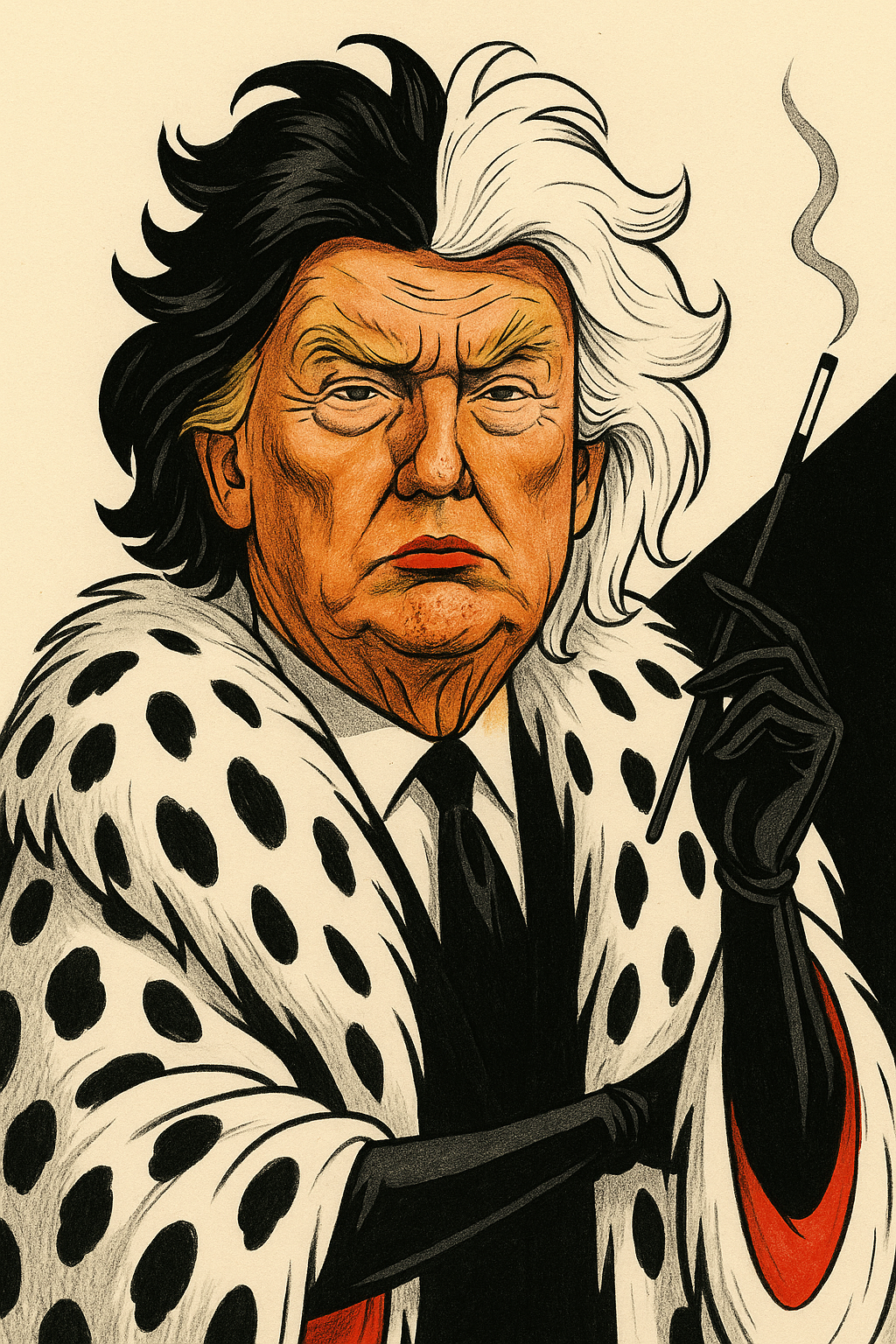
I apologize for oversleeping Monday and missing the celebration of President Trump’s second first 100 days in office. I don’t like round numbers anyway. I prefer to celebrate the odd ones, like today, day 101 of the sequel most of us hadn’t bargained for. Sort of has a Cruella DeVille feel to it, which is fitting for the accomplishments of current administration.
So take a look all these puppies proffered by Trump World so far and see if you can determine which will hunt, which are sorta true and which are as truthful as Trump is.
In his first 101 days, Trump has:
1. Renamed the Gulf of Mexico the Gulf of America.
2. Banned the penny and closed the Lincoln bedroom.
3. Declared “Missionary Position” his preferred diplomatic strategy.
4. Bought a Tesla even after it had been rebranded “the Swasticar.”
5. Ended the War on Christmas his first day in office.
6. Removed Jackie Robinson from the Department of Defense website.
7. Suggested the Cleveland Browns draft Shedeur Sanders in return for Republican financing of a new stadium.
8. Replaced the scientists at NOAA with Sharpies.
9. Said children will have to only get two dolls each this Christmas. But if they are both Kens, you may be subject to deportation.
10. Blamed DEI for the D.C. plane crash.
11. Proposed putting Stormy Daniels on the 69-cent stamp.
12. Claimed the founding fathers would’ve voted for him — “especially Jefferson, because of the France thing.”
13. Reduced Al’s Required Minimum Distribution by shrinking his 401(k).
14. Made Joe Biden seem spry by falling asleep at the Pope’s funeral.
15. Renamed the Mexican Hat Dance the MAGA Two-Step..
16. Proposed turning war-torn Gaza into a resort for the rich.
17. Declared it fake news that he copyrighted the term “fake news.”
18. Did not rule out Lindsay Graham’s suggestion that he should be a candidate for pope.
19. Told Congress he wanted to build a “Freedom Wall” along the Canadian border to keep Americans from leaving.
20. Hawked Trump sneakers, Bibles and meme coins.
21. Declared Juneteenth as the “Woke Fourth of July.”
22. Proposed $5,000 each to families for new babies; $10,000 if it’s his.
23. Said he would take a vaccine to prevent himself from talking like Robert F. Kennedy Jr.
24. Created the Department of Patriotic Math to count only the votes he likes.
25. Made major campaign contribution to Liberal Party Prime Minister in Canada.
26. Proposed a White House hot tub. Called it “the Situation Room, after hours.
27. Made homes in Palm Springs cheaper by scaring Canadians into leaving.
28. Said he knew nothing about Project 2025. Hired the author of Project 2025 to run the Office of Budget Management. But still hasn’t read document. Just signs its passages as executive orders.
29. Inspired a new take on an old joke: A Russian spy, a rapist and a convicted felon walk into a bar. Bartenders says, “Hello, Mr. President.”
30. Blamed Hillary Clinton for Pete Hegseth’s Signal chat.
31. Fired 280,000 federal workers, then had to rehire many of them.
32. Made people feel sorry for the IRS.
33. Proved that it only takes one Trump to screw in a light bulb. He just stands in the middle of the room and the rest of the world revolves around him.
34. Declared war on windmills. Called them “bird blenders with cancer rays.”
35. Apologized to the Blowfish after ordering an attack on the Houthis.
36. Demanded Apple replace Siri with a version that sounds like Sean Hannity.
37. Won his golf championship after the other guy dropped out.
38. Pardoned everyone who pooped in Nancy Pelosi’s office.
39. Made America Safe Again by deporting a 4-year-old cancer patient.
40. Renamed a Senate dining room dish “Turtle Soup” in Mitch McConnell’s honor
41. Proposed tariffs on papal indulgences.
42. Canceled Lawrence Welk’s appearance at the Kennedy Center after learning the bandleader is dead.
43. Showed skeptics at pope’s funeral that he does indeed sleep next to Melania.
44. Cut veterans’ benefits while saying “no one loves them more.”
45. Replaced diversity training with mandatory Bible study. Leviticus now counts as HR compliance.
46. Inspired “New Rule” by Bill Maher: Trump’s not as crazy as I am for having dinner with him.
47. Replaced the Associated Press at White House briefings with Marjorie Taylor Greene’s boyfriend.
48. Replaced Air Force One’s safety manual with a copy of The Art of the Deal.
49. Made Progressives applaud the Dallas Cowboys for not visiting the White House for three decades.
50. Banned transgender people from the military. Apparently they “don’t fit the vibe” of his new Space Force dress code.
51. Encouraged Chuck Schumer to show America how to lead from behind.
52. Improved the economy by boosting alcohol sales — especially at the Department of Defense.
53. Refused to rule out deportation for anyone who attacked a Tesla.
54. Suggested renaming the Virgin Islands. Said they “needed to grow up.”
55. Placed tariffs on all penguin merch.
56. Issued executive order to remove “Thou Shalt Not Covet Thy Neighbor’s Wife” from the Ten Commandments.
57. Declared English the official language of the United States — finally ending centuries of confusion at Waffle House.
58. Tried to trademark “God Bless America.”
59. Threatened to cancel his Amazon account if Jeff Bezos revealed how much tariffs were costing customers.
60. Suggested the moon landing was fake but promised to land there himself in 2028 — “and make it great again.”
61. Said he’d have done better at the Last Supper — “less bread, more branding.”
62. Proposed a $100 million military parade for his 79th birthday, prompting Congressman Steve Cohen to introduce legislation aimed at preventing taxpayer dollars from funding presidential birthdays.
63. Forced Japanese tourists to surrender their iPhone cameras.
64. Ordered all truck drivers to pass an English literacy test, which could create real problems in Kentucky, Tennessee and Mississippi.
65. Declared sainthood for himself. Said he had “two miracles — the ratings and the recount.”
66. Proposed banning abortion pills, drag queens, and rainbow-colored Skittles. Claimed “they’re all part of the same agenda.”
67. Suspended all aid to countries with too many vowels.
68. Commissioned a new Bible, with pictures.
69. Signed an executive order titled “Keeping Men Out of Women’s Sports,” because, well, you know there are almost a dozen transgender athletes in the NCAA.
70. Put tariffs on Girl Scout cookies. “Except the thin mints. I love the thin mints.”
71. Reclassified Mickey Mouse and other Disney characters as terrorists.
72. Declared that there are only two kinds of gender reveals – pink and blue, no rainbow.
73. Demanded NATO fight crime in Chicago.
74. Claimed to have a trade agreement with Narnia.
75. Declared the his second first 100 days the greatest by any president.
Okay, like Trump, I lied. I haven’t got 101 one-liners yet, but maybe you can help me fill out the list.
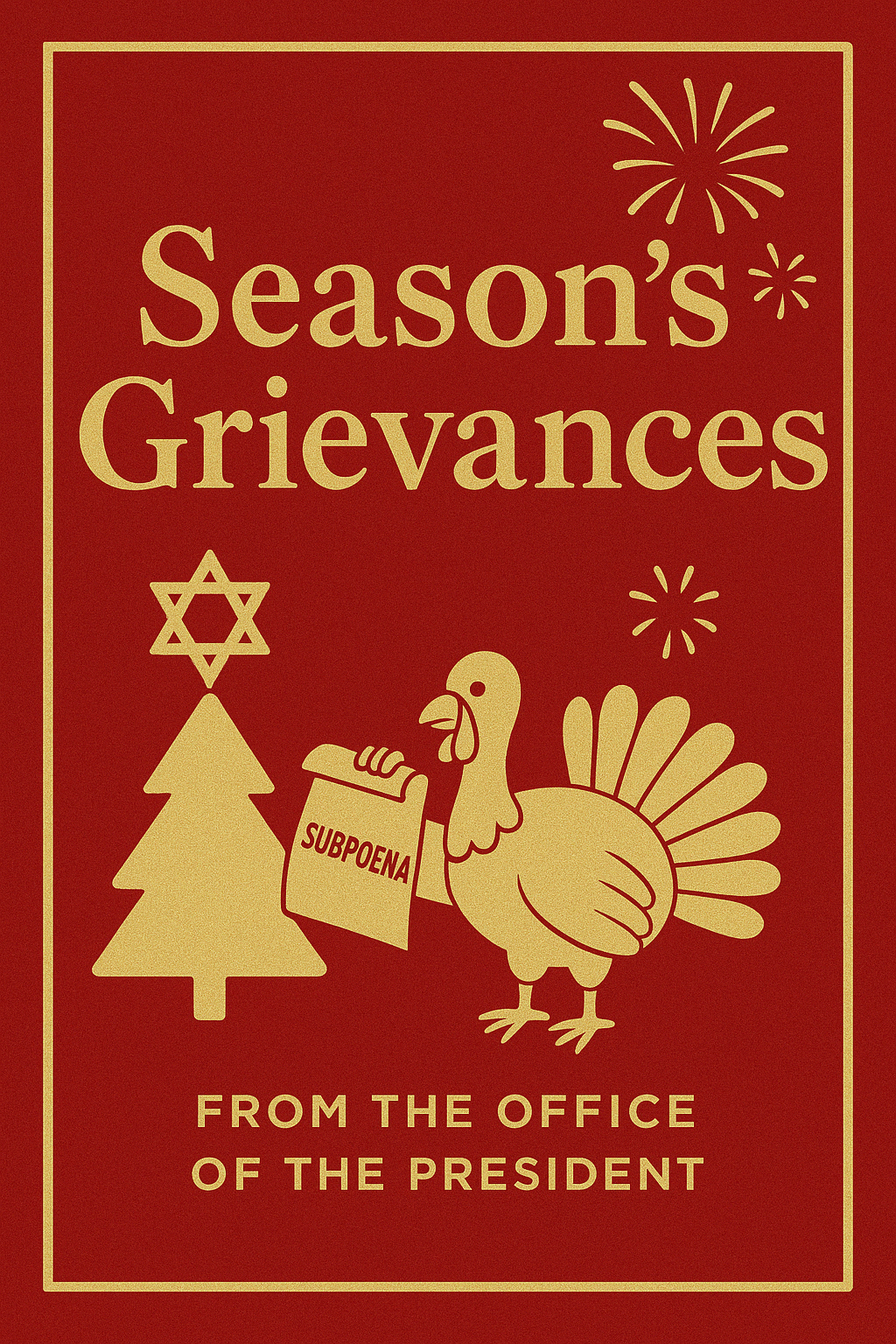
This year’s Easter message from President Donald J. Trump set a new standard in the category of weaponized holiday greetings. He’s the only person who can turn a Hallmark moment into a hostile takeover.
Instead of focusing on resurrection and renewal, Trump opened with a blistering attack on “corrupt prosecutors,” “fake judges,” and, of course, “Joe Biden’s open-border Easter Bunny amnesty plan.” He ended with, “Happy Easter to everyone — even the losers trying to put me in jail.”
Naturally, this got Al wondering: If this is how he does Easter, what about the rest of the calendar? Turns out, Trump might already have a whole greeting card line ready to go. Here’s a sneak preview from the “Make America Grate Again” Holiday Collection:
🗳️ Memorial Day
“We honor our brave heroes, especially the ones who voted for me. Unlike the generals Biden keeps hiring — those guys and especially the gals couldn’t organize a picnic, let alone a war. And Crooked Hillary would’ve replaced Arlington with a wind farm. I built the strongest military. Then they made it woke. SAD! Give me real soldiers like Pete Hegseth, who only leaks classified intel when there’s a camera around.
🌟 Independence Day
“Happy Fourth to all TRUE Americans. John McCain was a loser, Obama never celebrated this country, and Biden thinks patriotism is a microaggression. We’ll be independent again — from windmills, wimpy shower heads, immigrants, and Mitch McConnell’s sleepy leadership.”
💪 Labor Day
“I’ve done more for the working man than any president. I invented tariffs. I saved steel. Joe Biden wants you driving electric cars built by drag queens. Schumer thinks hard hats are a hate crime. I once carried a lunch pail. It was gold-plated.”
🌳 Arbor Day
“Arbor Day is fine. I like the good trees — the tall ones, the loyal ones. But let’s face it, many trees are in the way. California has all these fires — probably Antifa trees. And we can’t drill for oil if we’re babysitting a forest. My plan? Trump Trees. Big. Strong. Quiet. With nuts. Unlike the ones Biden plants.”
🎃 Halloween
“Trick-or-treating is great, but no masks. The radical Left used Halloween to test their Fauci lockdowns. Candy corn is woke. And no AOC costumes. Obama always gave out raisins. DISGRACEFUL.”
🍁 Thanksgiving
“Happy Thanksgiving to real Americans who know the Pilgrims came here legally. Biden invited 100 million illegals with pumpkin-scented amnesty. Hillary would’ve served plant-based stuffing and blamed the turkey for inflation.”
🛒 Black Friday
“Deals, deals, deals! I invented the art of the deals. I love Black Friday but we should rename it White Friday because that’s who’ll be out shopping. But not for that Chinese garbage. Only American-made products — like these fabulous MAGA golf shoes, Ivanka’s new perfume, and the Truth TV subscription box. Hillary shops at Whole Foods. I shop for freedom.”
🍄 Hanukkah
“Happy Hanukkah to the Jewish people who remember I moved the embassy to Jerusalem — unlike Biden, who can’t move a sentence. I did more for Israel than Moses. Chuck Schumer? He’s still figuring out how to use a dreidel.”
🎄 Christmas
“It’s called CHRISTMAS, not Happy Holidays, OK? Obama banned nativity scenes, Biden tried to nationalize the North Pole and Hillary once called Santa ‘a gendered symbol of capitalism.’ I saved Christmas. Santa endorsed me. Twice.”
🎉 New Year’s Day
“Happy New Year to all my supporters — and to the losers, cheaters, and backstabbers who said I’d be done in 2020: guess again! Biden’s resolution was to remember where he lives. Mine? Take back the White House, fire the Deep State, and fix the country in under 90 days. 2026 will be my year — and maybe, just maybe, J.D. Vance will stop blinking like he’s trapped in the Vatican gift shop.”
🌎 Bonus Cards for Trump’s Favorites
To Hillary Clinton: “Still waiting on that concession speech. Hope you kept the receipt.”
To Obama: “Worst Netflix deal in history. I had better ratings on The Apprentice.”
To Kamala Harris: “Happy Whatever-Holiday-She’s-Explaining-Laughing-About. She’s in charge of the border, right? Still? Feels like she’s been on mute since 2021. Her job performance has been so invisible, we’re considering her for Christmas Eve.”
To Chuck Schumer: “How can a guy from Brooklyn have so little flavor?”
To Mitch McConnell: “Thanks for the judges. Now retire. People want strength, not turtle soup.”
Final Thought From Al
So if you’re waiting for peace, unity, or a warm holiday wish, don’t hold your breath. Trump’s calendar has no seasons — just grievances.
Because somewhere, at Mar-a-Lago, a man in a red hat is looking at a Christmas tree and asking: “Can we build a wall around Kwanzaa?”
(The artificial intelligence program ChatGPT Pro was used to produce this column)
The latest episode of the Trump Terrors involves a government whistleblower named Daniel Berulis, an IT staffer at the National Labor Relations Board (NLRB). According to Trump’s least favorite Rhodes Scholar, Rachel Maddow, and the likely soon-to-be-banned news service Reuters, Berulis says he has evidence that Elon Musk’s tech team was granted sweeping access to sensitive case files.
Then it gets weird.
Berulis received a threatening note taped to his door — complete with drone surveillance stills of him walking his dog and private info only someone deep inside the system could know. In other words: the kind of thing that happens right before George Clooney shows up in a wool coat with a USB drive and a thousand-yard stare. In fact, as Al’s Pal Jeff from Texas suggested, it does sound like a Clooney movie.
So, by George, I thought, why not make it one?
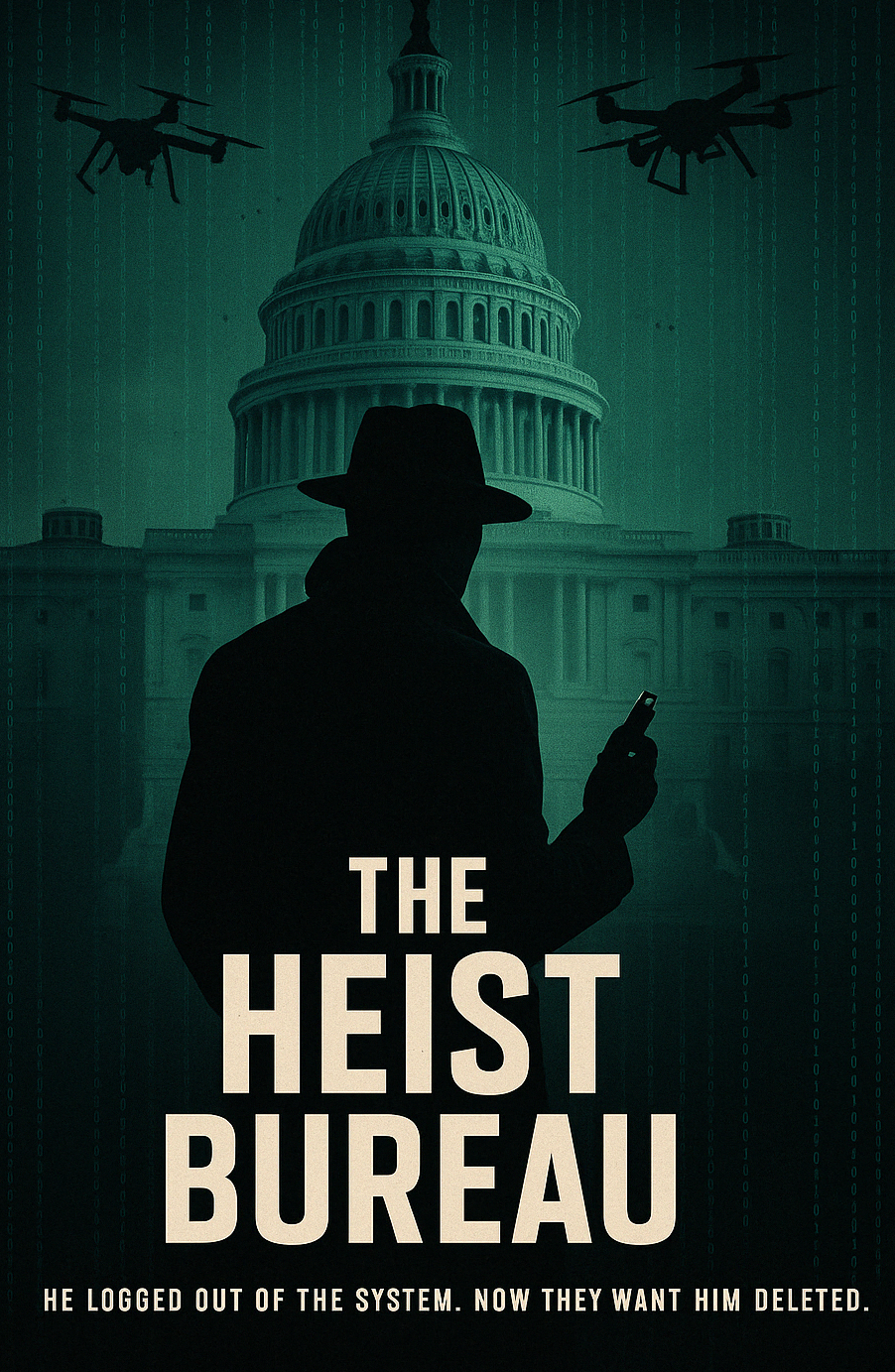
“The Heist Bureau”
Written and directed by George Clooney A Smokehouse Pictures Production
Tagline: They said they wanted to drain the swamp. Turns out, they wanted to bottle the water and sell it back to us.
Genre: Political thriller meets dark comedy. Think Three Days of the Condor meets Wag the Dog.
Act I: The Quiet Leak
Clooney plays Daniel Berulis, a weary federal IT guy at the NLRB who notices strange login activity from a group called DOGS — the Department of Government Shysters. They’re supposed to “modernize” government, but their HR files are blank and their USB drives are blinking.
When huge chunks of data start disappearing into offshore voids, Berulis does the unthinkable: he calls a journalist. Then the doorbell rings.
Scene: “IRS Karaoke Night”
In a seedy D.C. karaoke bar, Berulis meets a disillusioned IRS data analyst (played by Paul Giamatti). She’s singing “I Will Survive” between bites of fried pickles.
She slides him a flash drive labeled Refund Reaper v3.7.
“They’re not looking for fraud, Danny. They’re looking for patterns. Metadata. Movement. Preferences. They’re building a consumer electorate.”
She takes a sip and adds:
“Tell the public? Good luck. Last guy who tried that got put on a no-fly list and banned from FroYo.”
Act II: The Heist Revealed
Berulis is now the hunted. Drones circle. A break-in nearly catches him off guard. He realizes the IRS, DOJ, even his own agency, are compromised.
The journalist (Jodie Comer? Oscar Isaac?) uncovers that DOGS is a private tech unit embedded across federal agencies, mining public data under the guise of efficiency — not for safety, but for profit.
Scene: “The Leak Goes Live”
In a community college basement in Akron, Berulis, the journalist, and a ragtag crew — a retired Medicare claims processor, a student coder, and a disgraced HUD analyst — upload everything to a secure leak site.
Journalist: “You sure this is the right move?”
Berulis: “No. But it’s the last one we’ve got.”
#DataHeist starts trending. Cut to DOGS HQ: a screen flashes Public Access: GRANTED. Printers around D.C. start spitting subpoenas.
Act III: Resistance Goes Viral
A decentralized army of librarians, grandma coders, and rogue feds join in. The story explodes, culminating in a live-streamed Senate hearing.
Scene: “The People’s Data”
Senate Committee on Data Privacy.
Berulis testifies. A smug DOGS exec dodges questions. Republican senators deflect with talk of immigration. One Democrat tries to sound serious but bland.
Then enters Senator Cortez:
“Let me ask this plainly: Why was a private entity embedded in the IRS, CMS, NLRB, and HUD with unrestricted access and zero oversight?”
No one answers.
She slams her folder shut:
“This wasn’t modernization. This was monetization. This wasn’t about protecting the taxpayer. It was about harvesting the taxpayer.”
Gallery erupts. DOGS exec calls his lawyer. Clooney just sips water. At least we think it’s just water.
Closing Scene: “Do We Still Have a Constitution?”
Berulis sits on a porch in his native Kentucky, sipping bourbon, Leon at his feet.
Journalist: “So what now?”
Berulis: “We don’t stop the machine. We just make it stutter loud enough for someone to notice.”
Cue mandolin version of Fortunate Son. Credits roll over leaked memos and resignation letters.
One final shot: In an outtake from the film, Clooney is back at the karaoke bar, crooning:
“They’ve given me a number, and taken away my name…”
Coming soon, maybe. Or already playing.
Either way, Al’s watching.
(The ChatGPT Plus artificial intelligence program was used in the production of this article. @copyright 2025, Mr. Write Coach LLC.)